
AI Voice Agentsthat understand your business instantly
Deploy an AI voice assistant from a website URL in minutes.
Support multilingual voice conversations across web and phone.
Deliver continuous customer support without human intervention.
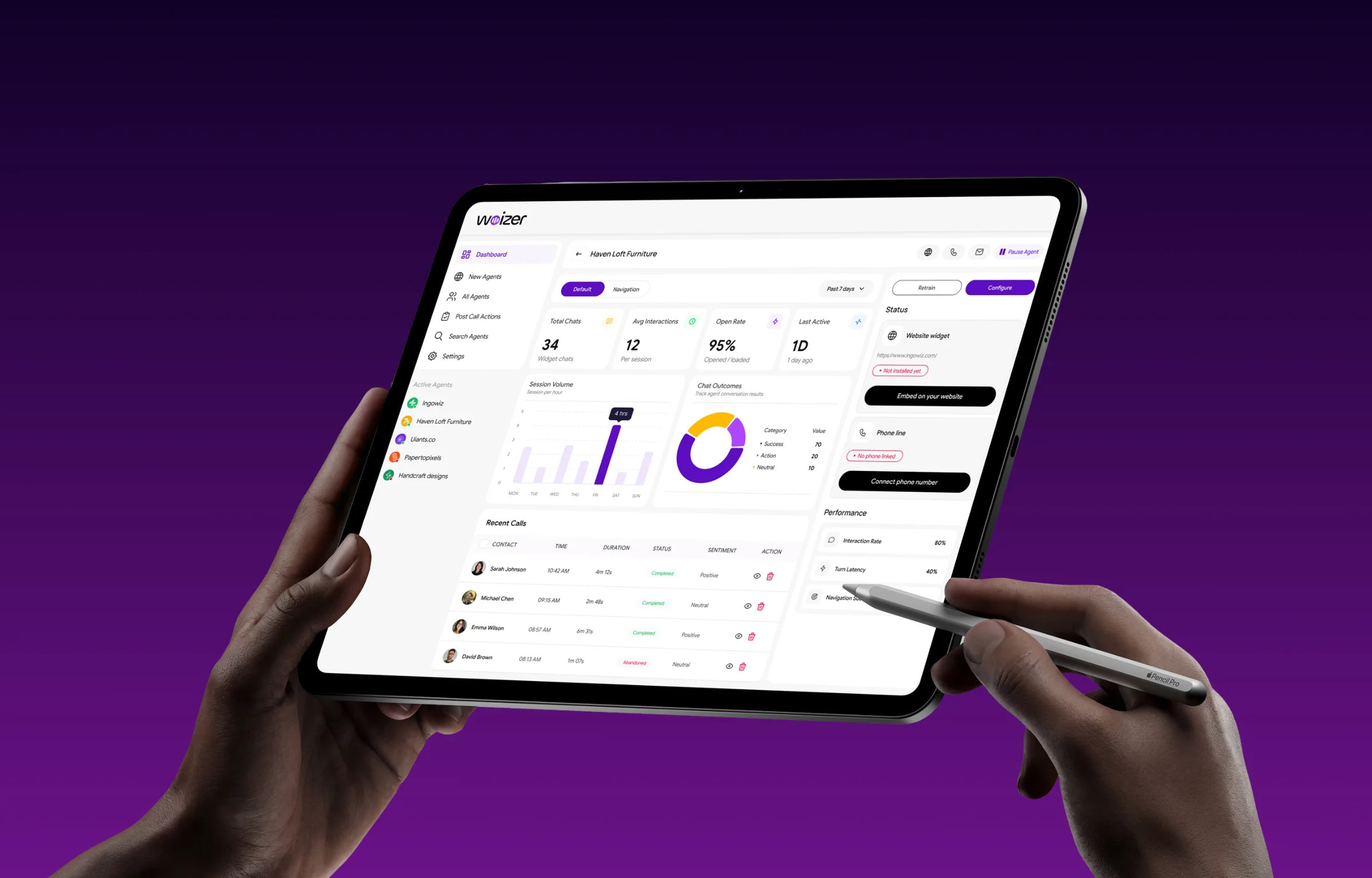
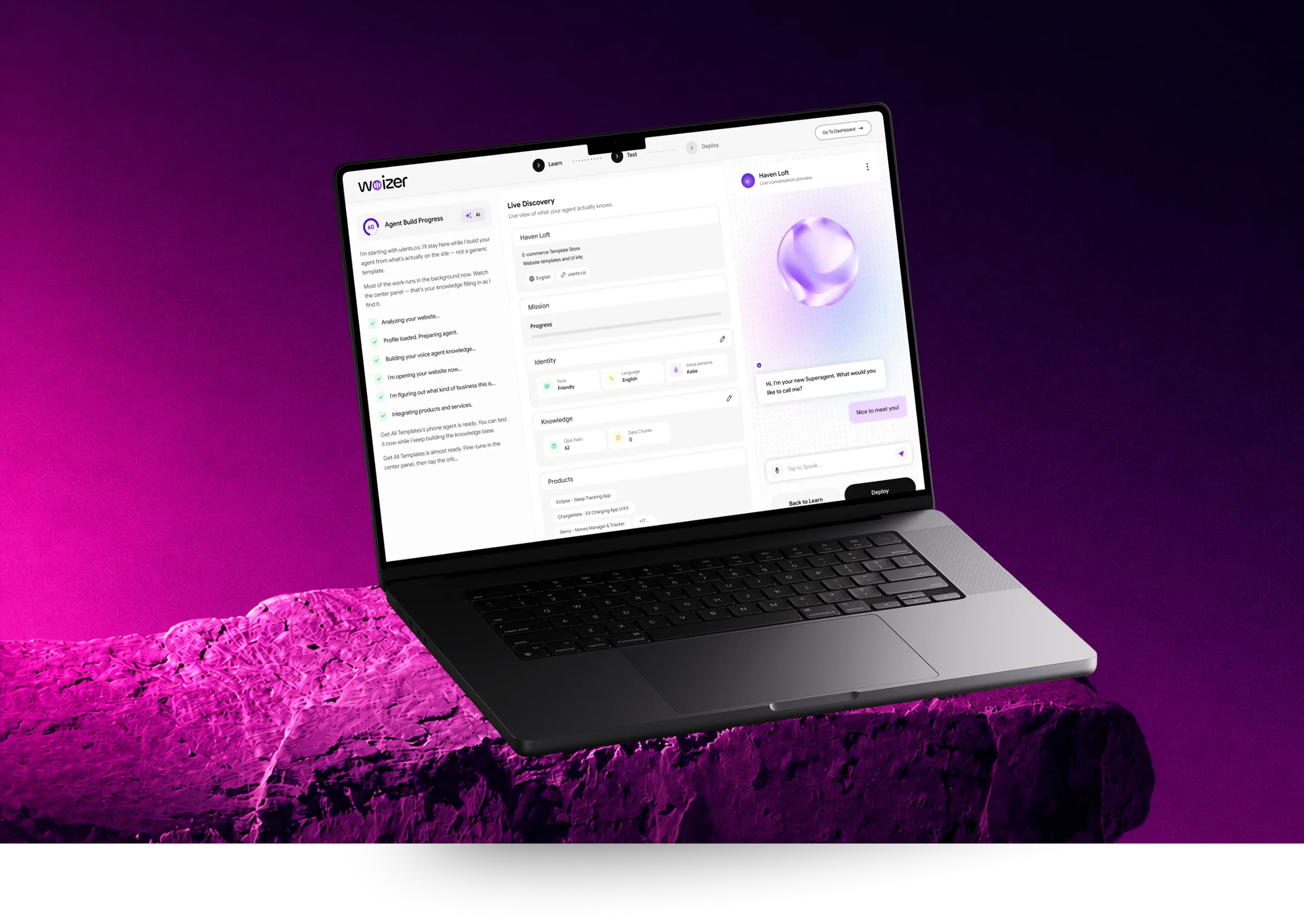
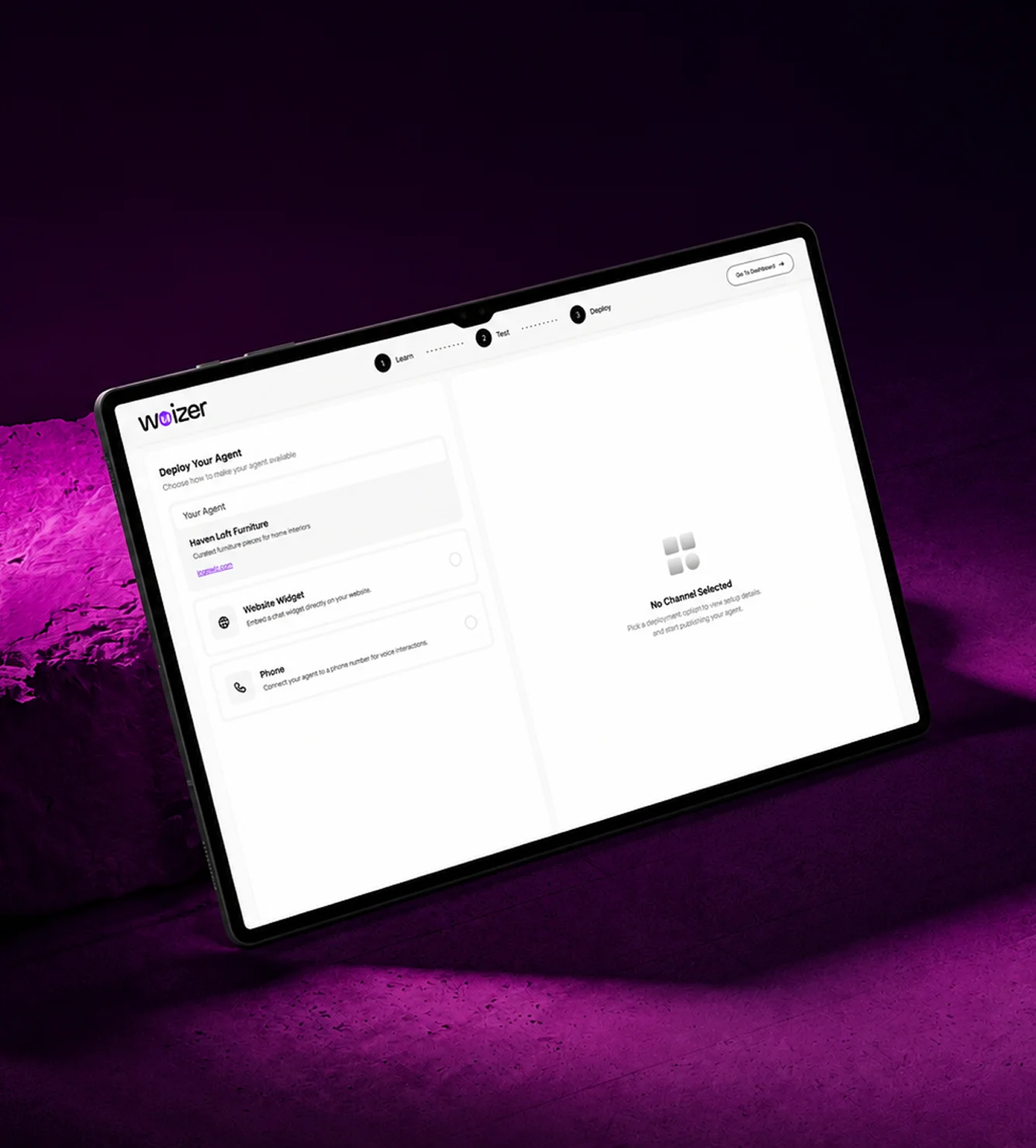
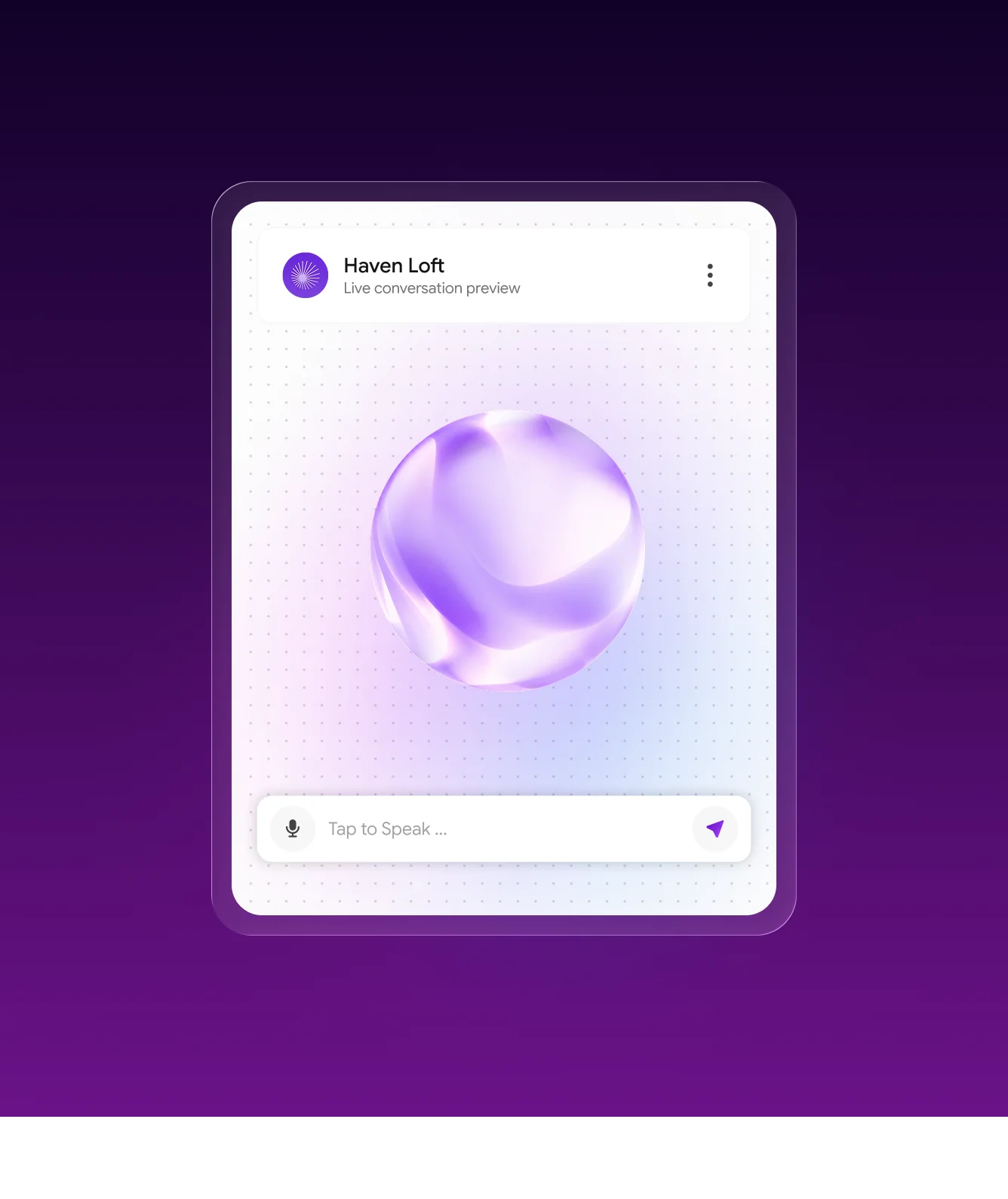
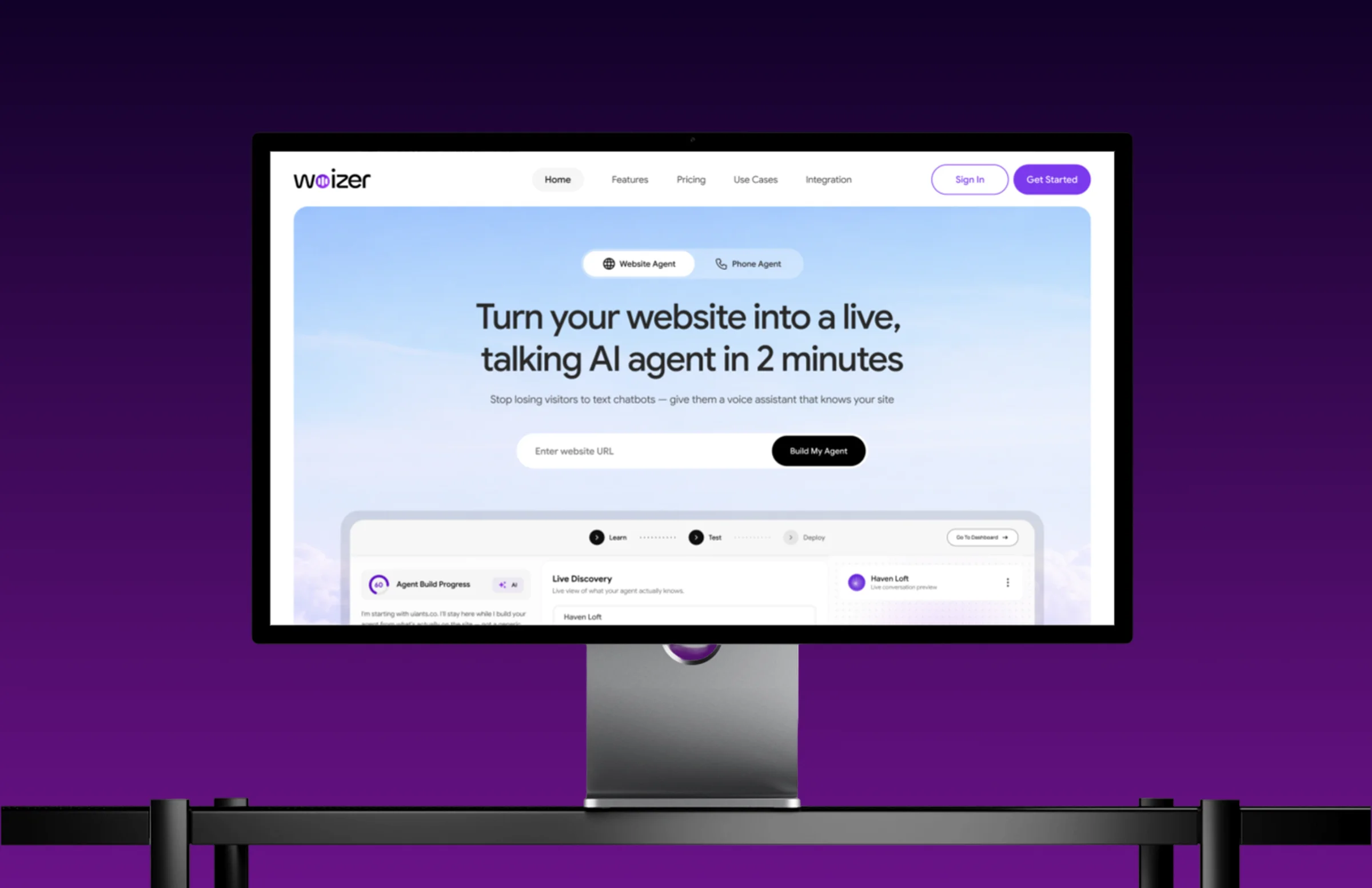
Woizer is an AI-powered voice agent platform that enables businesses to transform their websites into intelligent, conversational assistants in just a few minutes. By simply providing a website URL, the platform automatically analyzes website content, extracts business information, and builds a structured knowledge base that powers a natural voice AI agent. Woizer combines automated website discovery, AI knowledge generation, multilingual voice conversations, live testing, analytics, and multi-channel deployment into a single platform, allowing businesses to deliver instant customer support, answer inquiries, capture leads, and automate routine interactions without requiring technical expertise.
Traditional customer support solutions often rely on static FAQs, text-based chatbots, or manual support teams that struggle to provide engaging, real-time assistance across multiple channels. Woizer was designed to simplify this experience by replacing fragmented support tools with a unified AI voice solution that understands a business's website, products, services, and policies automatically. The platform focuses on reducing implementation time, improving customer engagement through natural voice interactions, and enabling businesses to deploy intelligent AI assistants across websites and phone channels with minimal setup while continuously monitoring performance through built-in analytics.
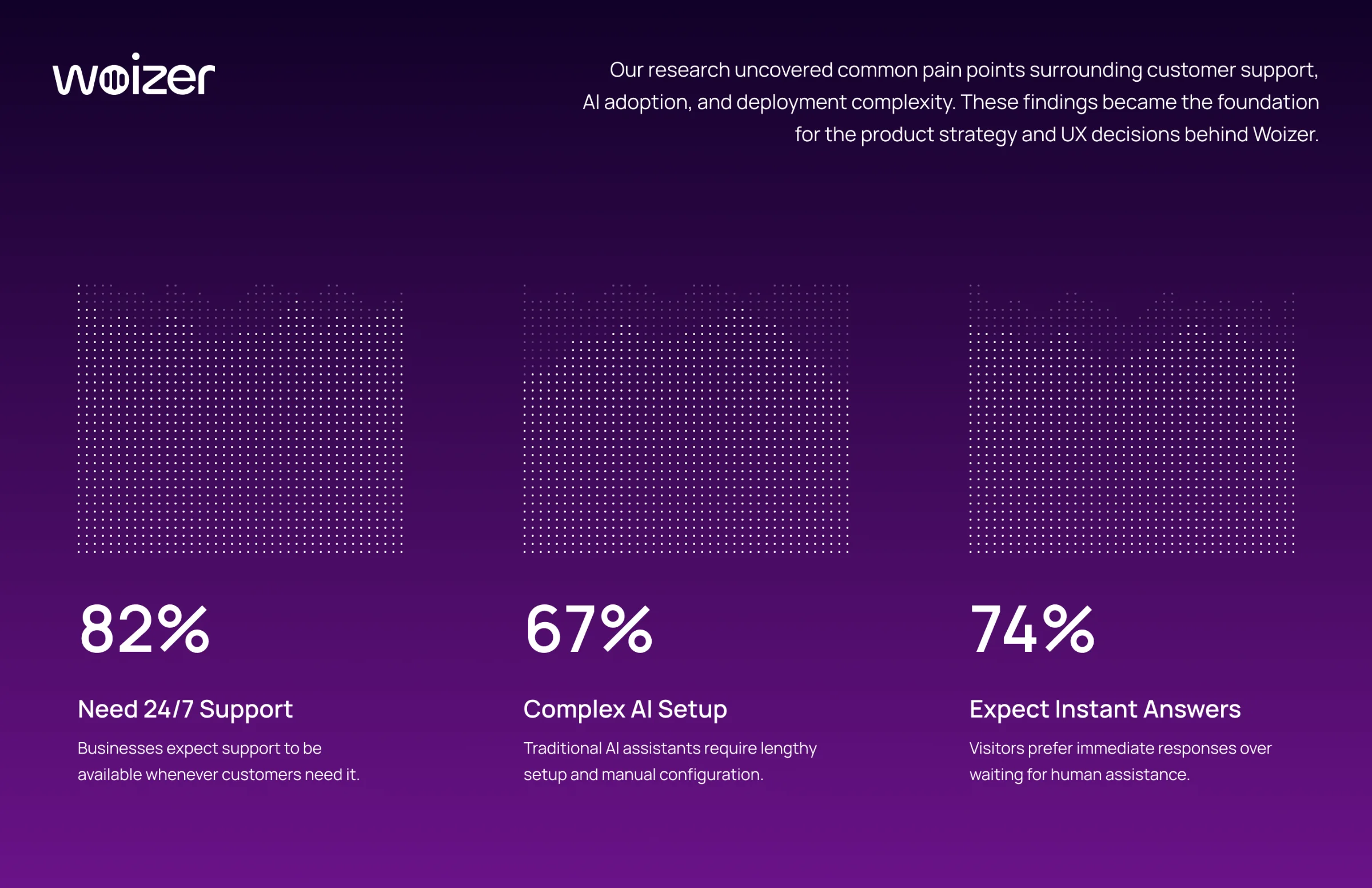
Challenges We Identified
Traditional customer support solutions often rely on static FAQs, text-based chatbots, and human support teams that require continuous manual effort to respond to customer inquiries. These approaches frequently provide inconsistent experiences, limited availability, and slow response times, making it difficult for businesses to deliver personalized support at scale. At the same time, deploying AI-powered assistants typically requires complex configuration, extensive knowledge base creation, and technical expertise, creating barriers for businesses that want to automate customer interactions.
Through product analysis and user-focused evaluation, we identified the need for an AI voice platform that could automatically understand a business from its existing website and enable fast, intuitive deployment without technical complexity. Woizer was designed to simplify this process by transforming website content into a structured knowledge base, allowing businesses to create, test, and deploy intelligent voice agents capable of handling customer conversations across multiple channels while providing actionable insights through built-in analytics.
- 1.Complex AI Setup Process: Traditional AI assistants require manual training, content organization, and technical configuration before they can be deployed effectively. Educators spend significant time manually creating questions,
- 2.Fragmented Customer Support: Businesses often rely on multiple disconnected tools for live chat, phone support, FAQs, and lead capture, resulting in inconsistent customer experiences.
- 3.Lack of Personalized Assessments: Students receive the same questions without adaptive difficulty based on individual performance.
- 4.Limited Availability: Human support teams cannot provide continuous 24/7 assistance, causing delayed responses and missed customer opportunities outside business hours.
- 5.Time-Consuming Knowledge Management: Updating FAQs, products, services, and business information across multiple support channels requires significant manual effort.
- 6.Poor Customer Engagement: Static FAQ pages and rule-based chatbots often fail to deliver natural, conversational interactions that keep visitors engaged.
- 7.Difficult Multi-Channel Deployment: Businesses struggle to maintain consistent customer experiences across websites, phone support, and other communication channels.
- 8.Lack of Performance Visibility: Existing solutions provide limited insights into customer interactions, conversation outcomes, and agent performance, making continuous improvement challenging.
- 9.Technical Barriers for Small Businesses: Many AI platforms require developer involvement, custom integrations, or engineering resources, making advanced automation inaccessible for businesses without technical teams.
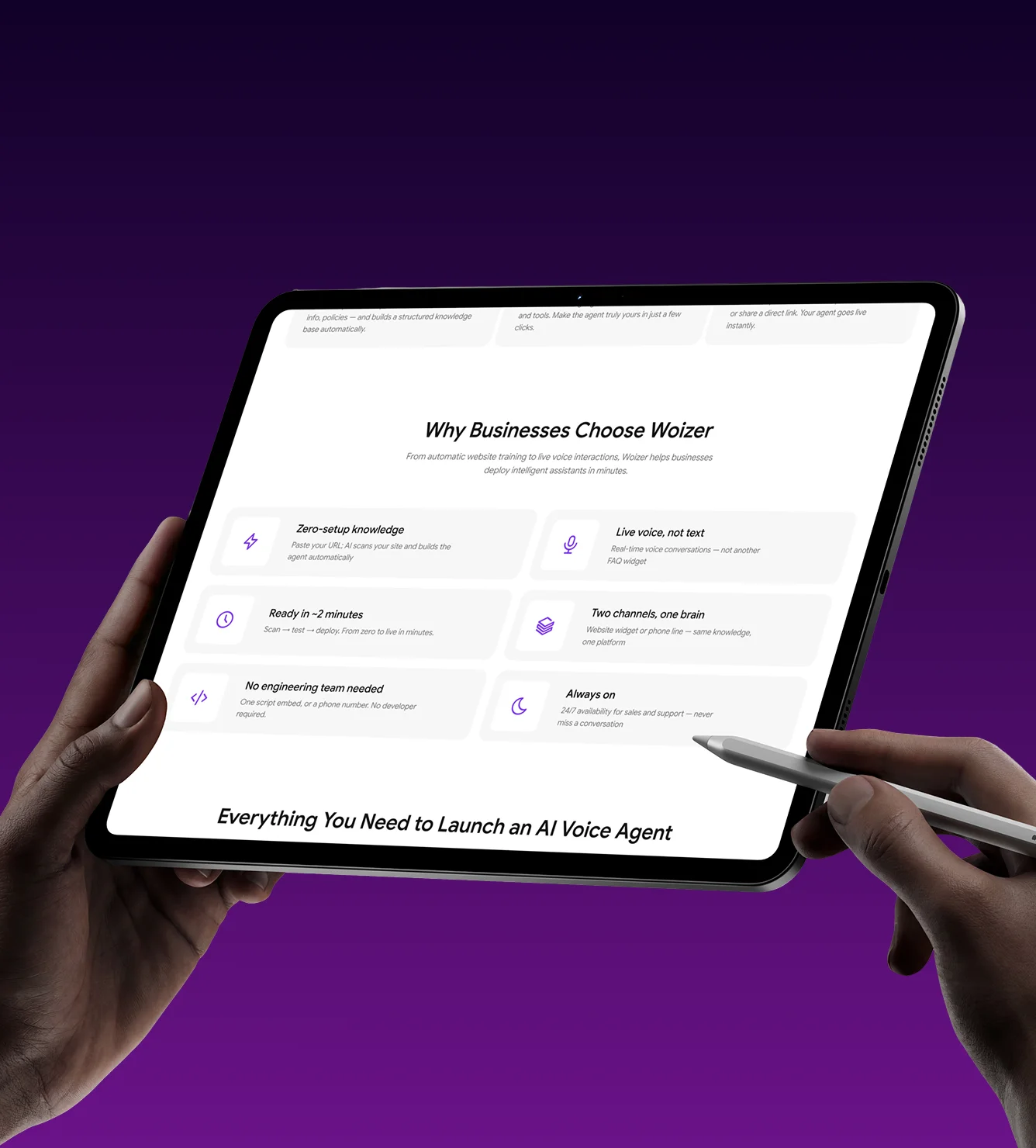

How We Solved It
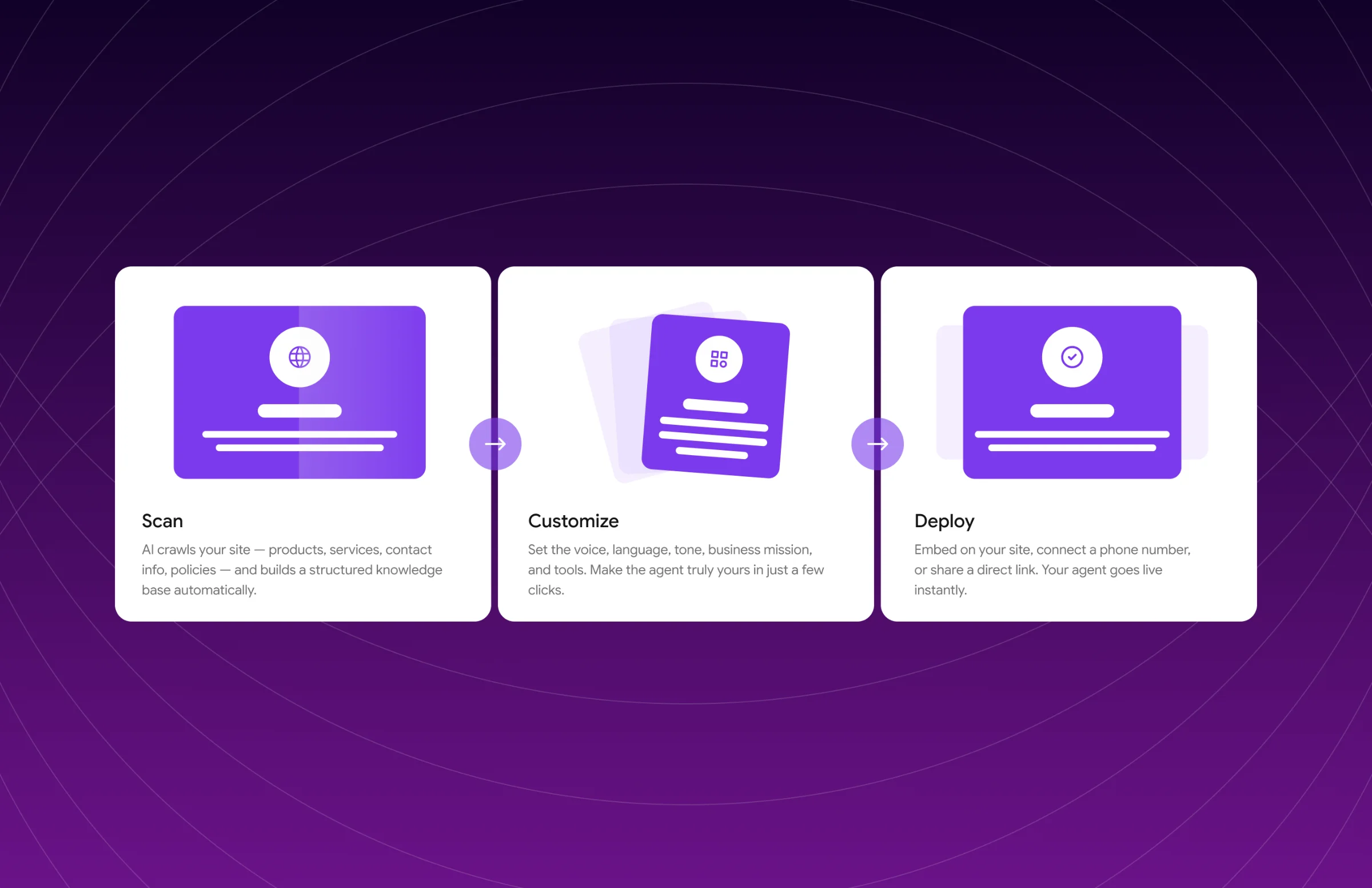
To simplify AI adoption for businesses, we designed Woizer as an AI-powered voice agent platform that transforms any website into an intelligent customer assistant within minutes. Instead of requiring manual knowledge base creation or complex AI configuration, the platform automatically analyzes website content, understands the business, and generates a structured knowledge base that powers natural voice conversations across multiple customer touchpoints.
We created a streamlined experience that combines automated website discovery, AI voice technology, intuitive customization, live testing, and multi-channel deployment into a single workflow. Businesses can personalize their agent's identity, voice, language, and behavior before deploying it to their website or phone line, while built-in analytics provide continuous insights into customer interactions and agent performance.
- 1.Automated Website Discovery: Instantly scans websites to extract products, services, business information, and policies, creating a structured knowledge base without manual setup.
- 2.AI Voice Agent: Delivers natural, real-time voice conversations that answer customer questions, provide guidance, and improve engagement through human-like interactions.
- 3.Simple Agent Customization: Allows businesses to personalize their AI assistant by configuring its identity, voice persona, language, tone, mission, and business knowledge through an intuitive interface.
- 4.Live Testing Environment: Enables businesses to interact with the AI agent before deployment, ensuring responses, behavior, and customer experience meet expectations.
- 5.Multi-Channel Deployment: Supports seamless deployment through website widgets, dedicated phone numbers, and shareable links while maintaining a single, unified knowledge base.
- 6.Smart Automation Tools: Extends the AI agent with capabilities such as appointment booking, form completion, email summaries, SMS notifications, and customer follow-ups.
- 7.Performance Analytics: Provides actionable insights into conversations, customer sentiment, interaction rates, navigation success, and overall agent performance for continuous optimization.
- 8.Accessibility & Ease of Use: Eliminates technical barriers by enabling businesses to build, customize, and deploy AI voice agents without requiring development or engineering expertise.
- 9.Scalable AI Platform: Built with a flexible architecture that supports multiple industries, multilingual experiences, future AI capabilities, and growing business requirements.
How we approached the UX design
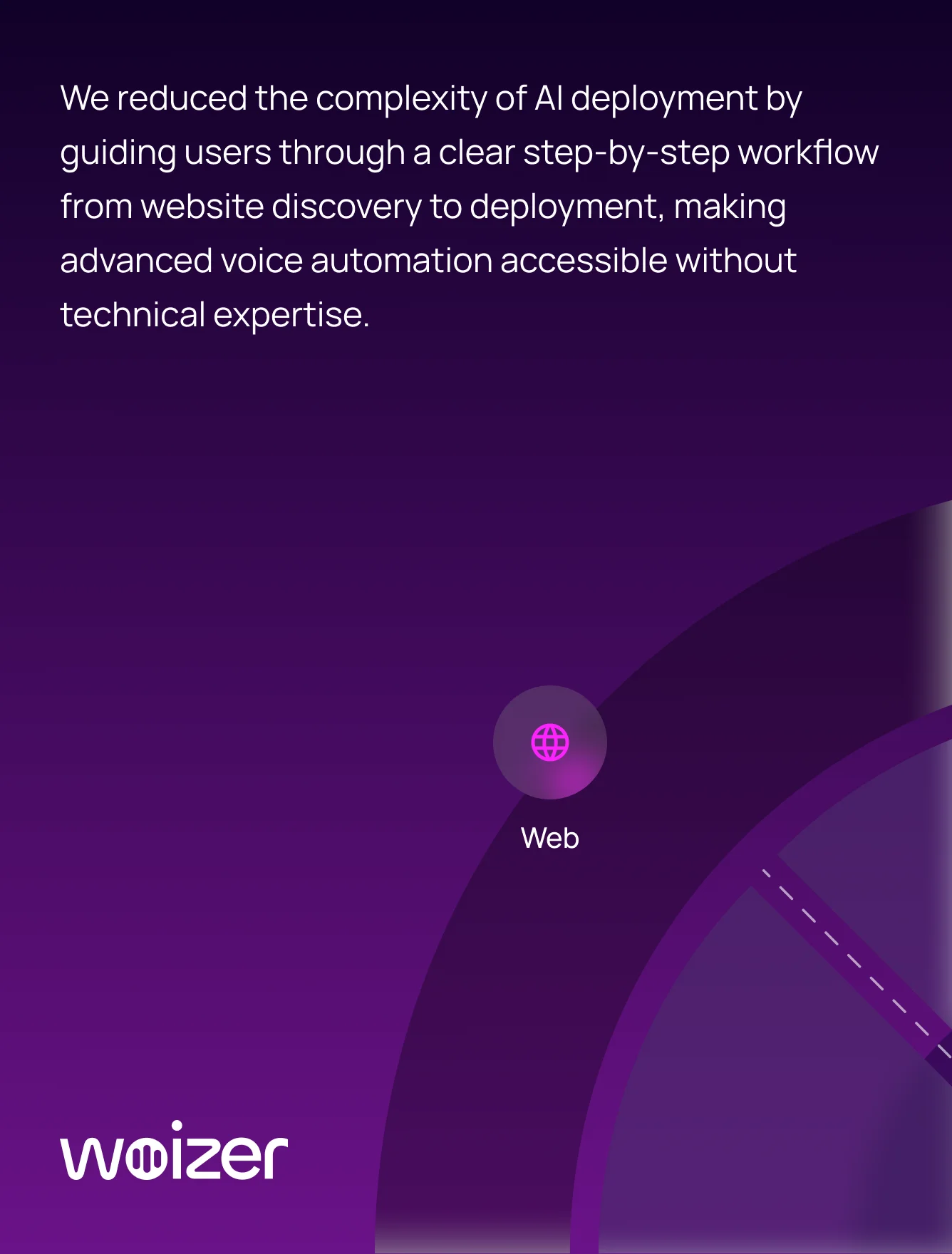
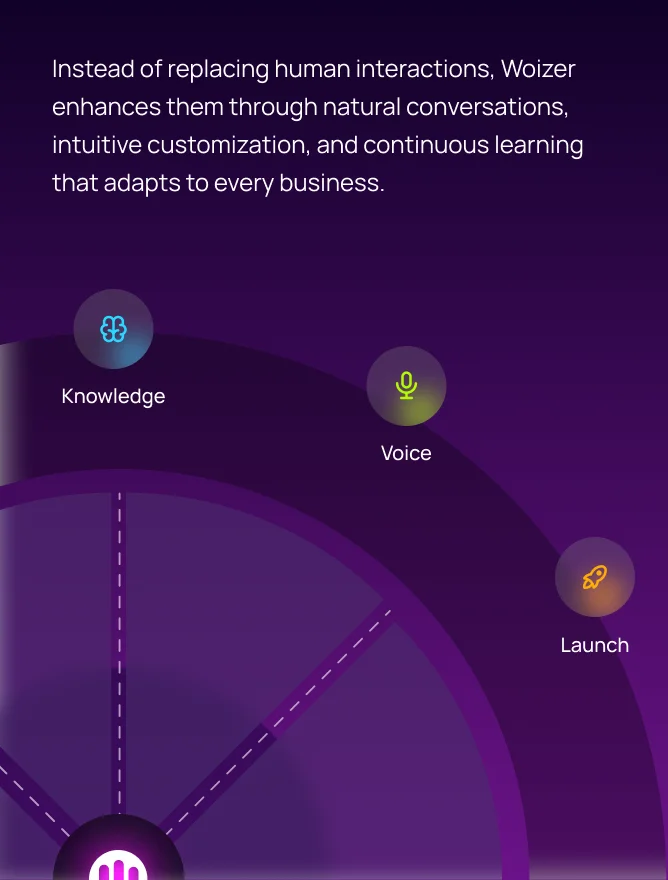
Our design process for Woizer focused on making AI voice automation accessible, intuitive, and fast for businesses of all sizes. We combined product analysis, user-centered research, workflow mapping, rapid prototyping, and iterative testing to create an experience that simplifies AI agent creation while reducing technical complexity. The goal was to design a platform that enables businesses to move from website discovery to AI deployment in just a few minutes without sacrificing usability or flexibility.
Research & Discovery
Understanding business workflows, customer support challenges, and AI adoption barriers.
- Research & competitive analysis
- Customer support workflow analysis
- AI onboarding evaluation
- Opportunity identification
UX Strategy & Planning
Defining user journeys, onboarding flows, deployment strategy, and information architecture.
- User journey mapping
- Information architecture
- Agent configuration strategy
- Multi-channel deployment planning
Design & Prototyping
Designing intuitive interfaces for AI agent creation, customization, testing, and analytics.
- High-fidelity UI design
- Interactive prototypes
- Dashboard & analytics design
- Responsive experience
Testing & Refinement
Refining the experience through usability testing, stakeholder feedback, and design iterations.
- Usability testing
- Prototype Validation
- Interaction Refinement
- Developer handoff
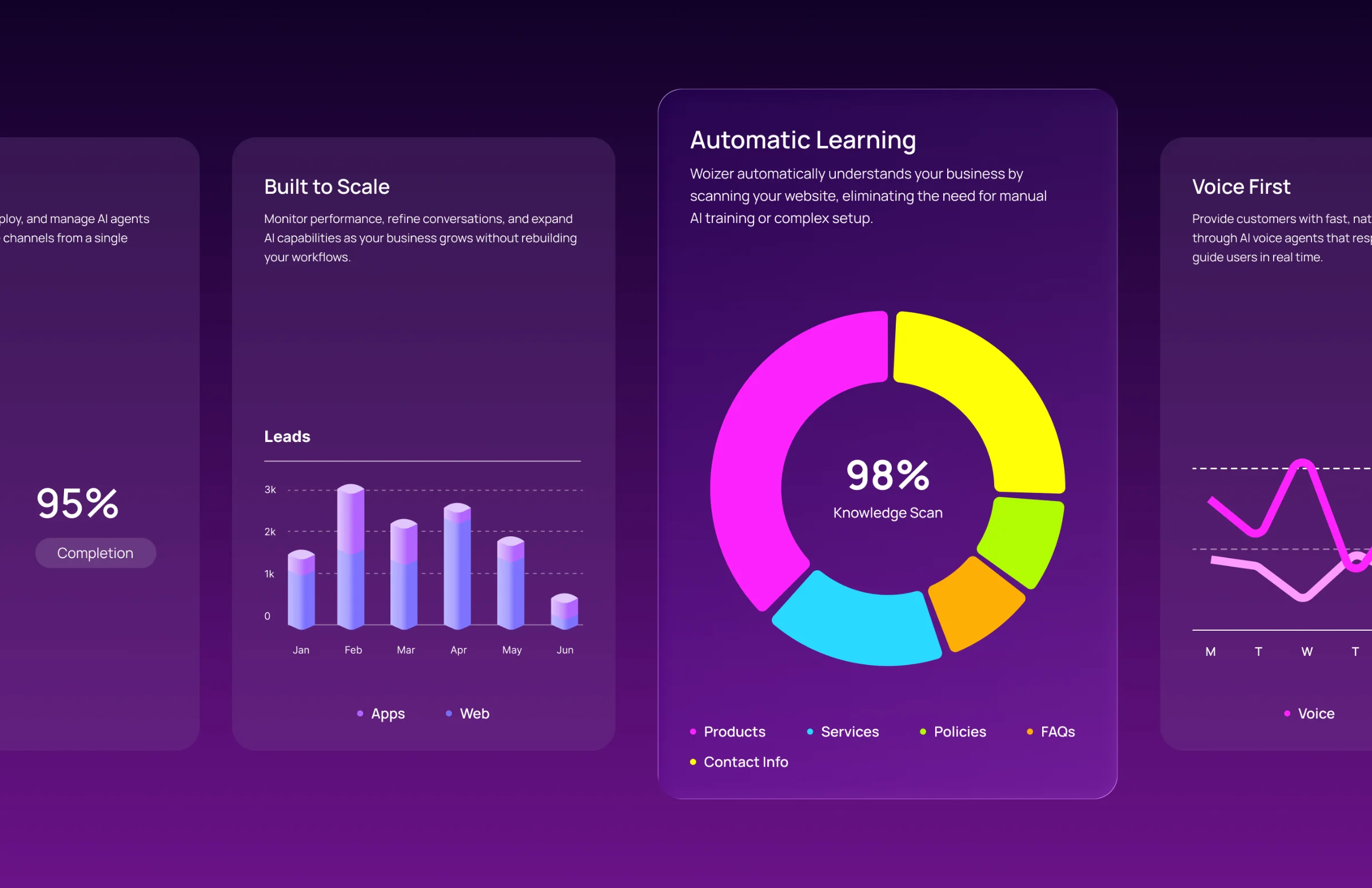
UX Research & Design Artifacts
Our research focused on understanding how businesses currently manage customer interactions and the challenges involved in deploying AI-powered support solutions. We identified opportunities to simplify AI onboarding, reduce setup time, improve customer engagement, and provide greater visibility into agent performance through an intuitive, end-to-end platform.
- Product audit: Evaluated existing AI chatbot and voice assistant platforms to identify usability gaps, onboarding friction, and opportunities for automation.
- Competitor research: Analyzed conversational AI, customer support, and automation platforms to understand industry best practices, deployment models, and user expectations.
- User journey mapping: Mapped the complete workflow from entering a website URL to AI agent creation, customization, live testing, deployment, and ongoing management.
- Business Workflow Analysis Studied how businesses handle customer inquiries, lead generation, appointment booking, and support requests to identify automation opportunities.
- Usability testing: Tested onboarding flows, AI customization, deployment processes, and dashboard interactions to validate clarity, efficiency, and ease of use.
- Design artifacts: Produced user flows, information architecture, wireframes, high-fidelity UI designs, interaction prototypes, and design system components to support scalable product development.
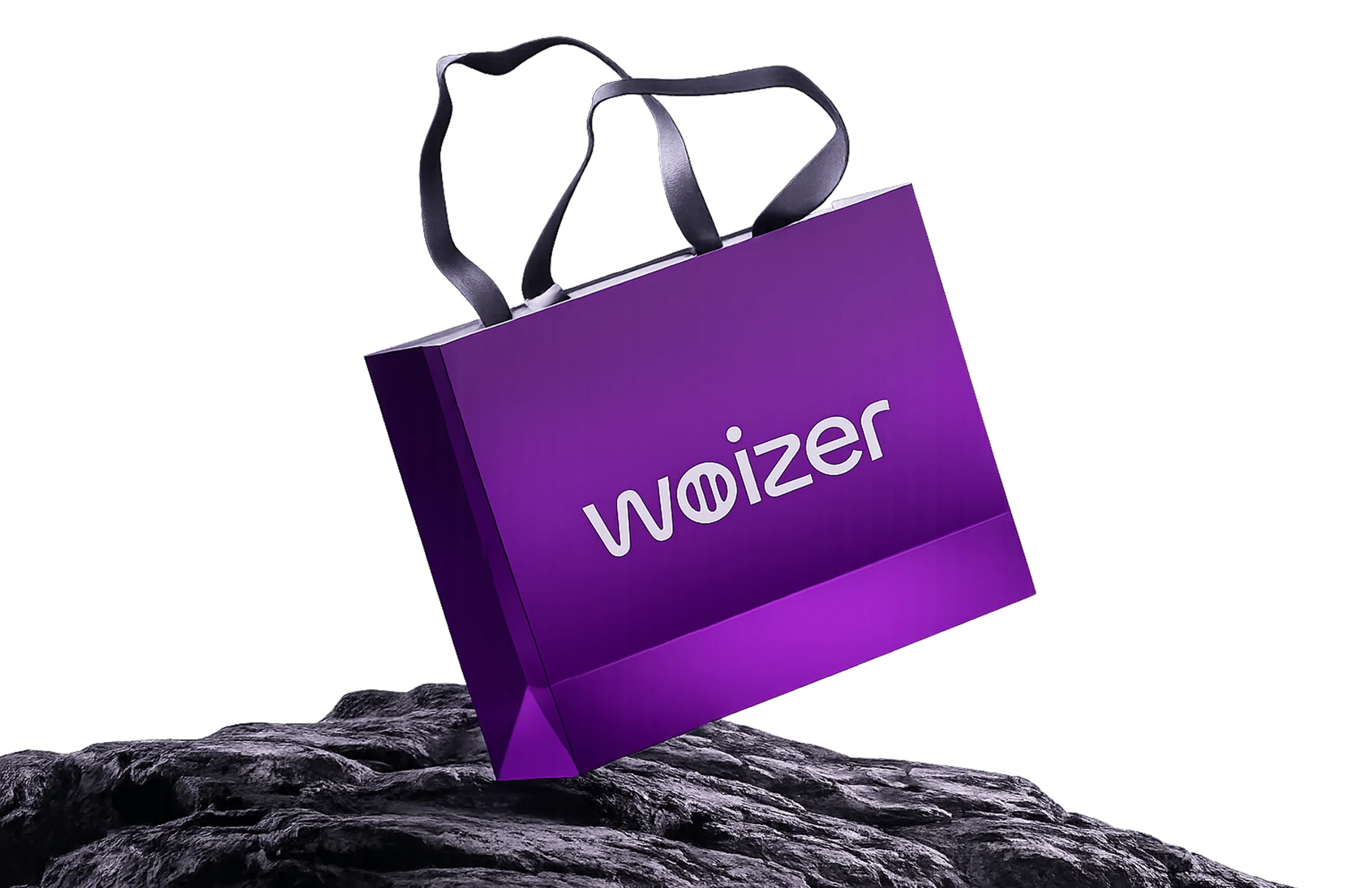
Visual Identity & Brand Story
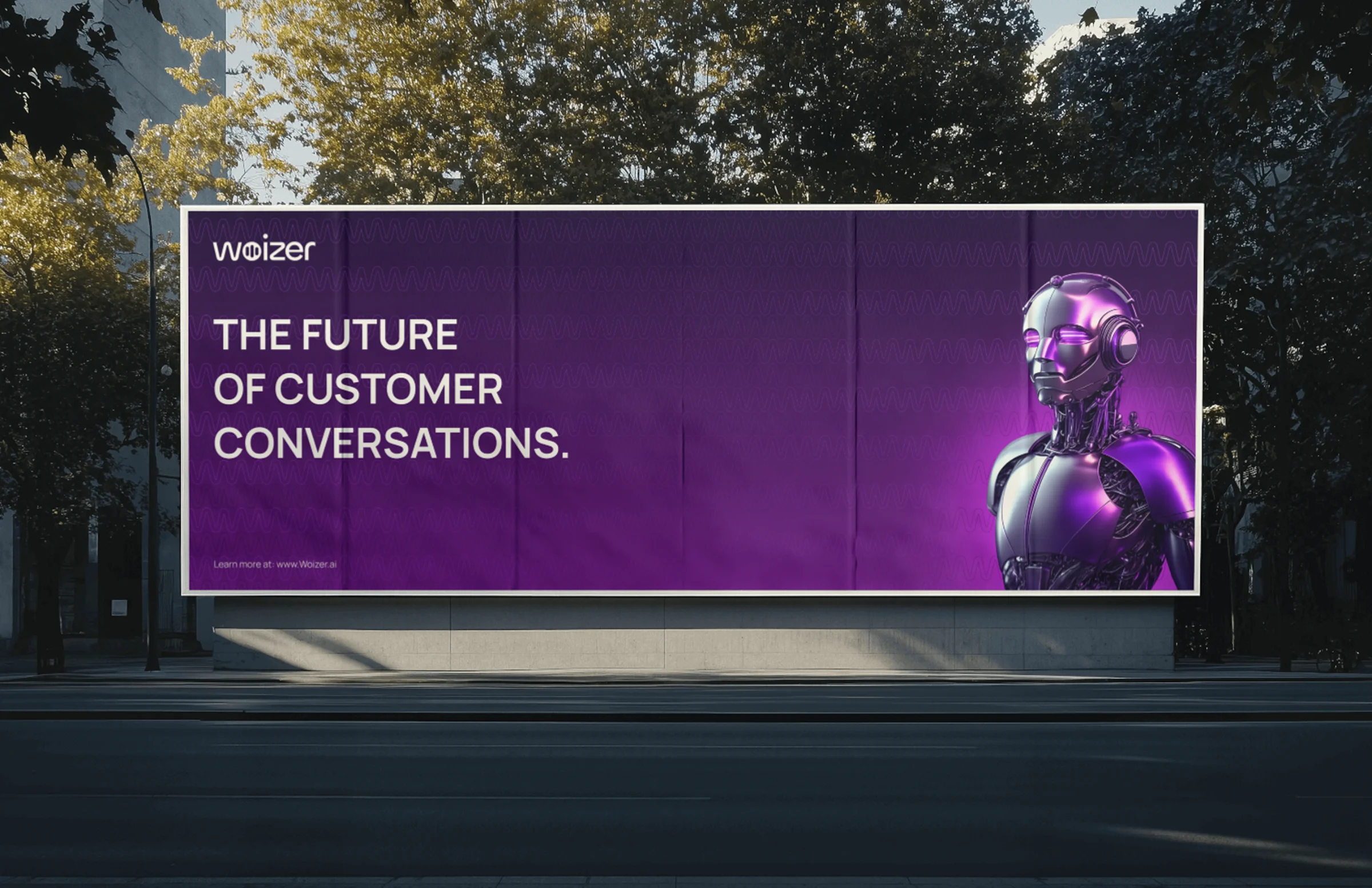
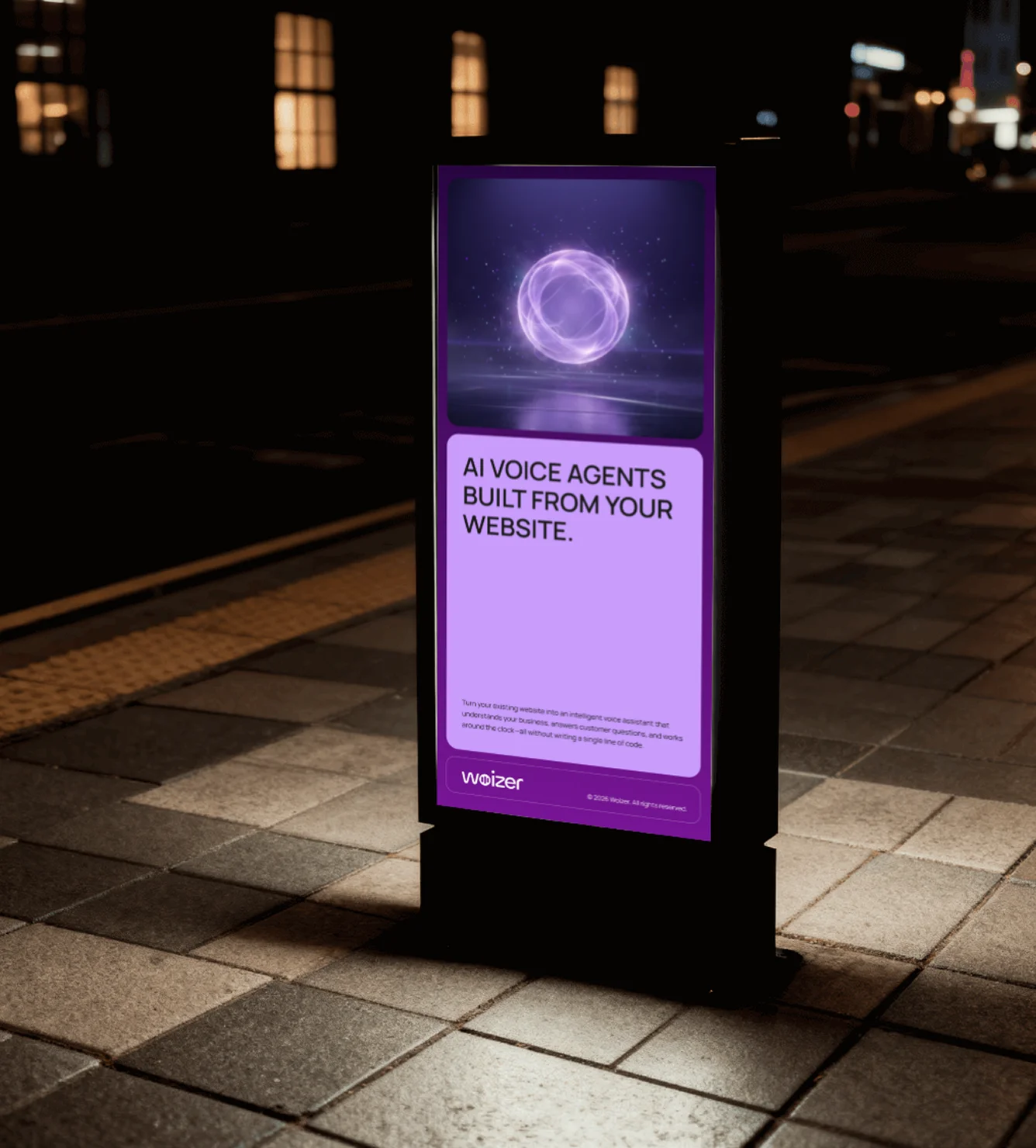
Woizer was designed to make AI voice automation feel intuitive, trustworthy, and approachable. Rather than overwhelming users with technical complexity, the interface focuses on clarity, guided workflows, and meaningful interactions that help businesses create, test, and deploy AI voice agents with confidence. Every visual decision supports a frictionless experience—from onboarding and customization to deployment and performance monitoring.
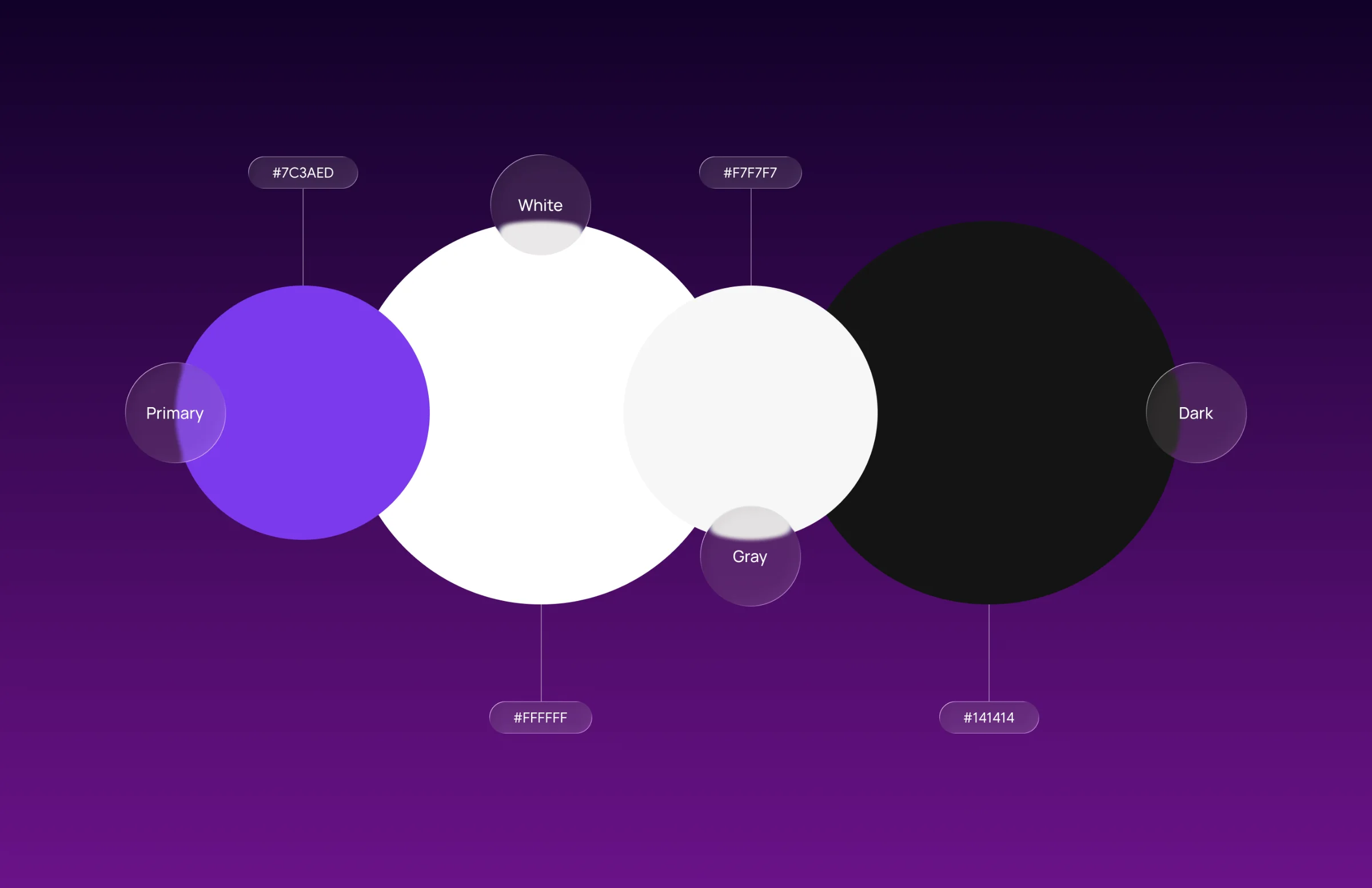
Our visual identity is centered around #7C3AED, a vibrant purple that represents intelligence, innovation, and confidence. The color is used strategically to highlight primary actions, AI interactions, and key interface elements, while neutral surfaces and generous whitespace maintain focus on the content. Rounded components, subtle shadows, and refined gradients create a modern SaaS aesthetic that feels both premium and approachable.
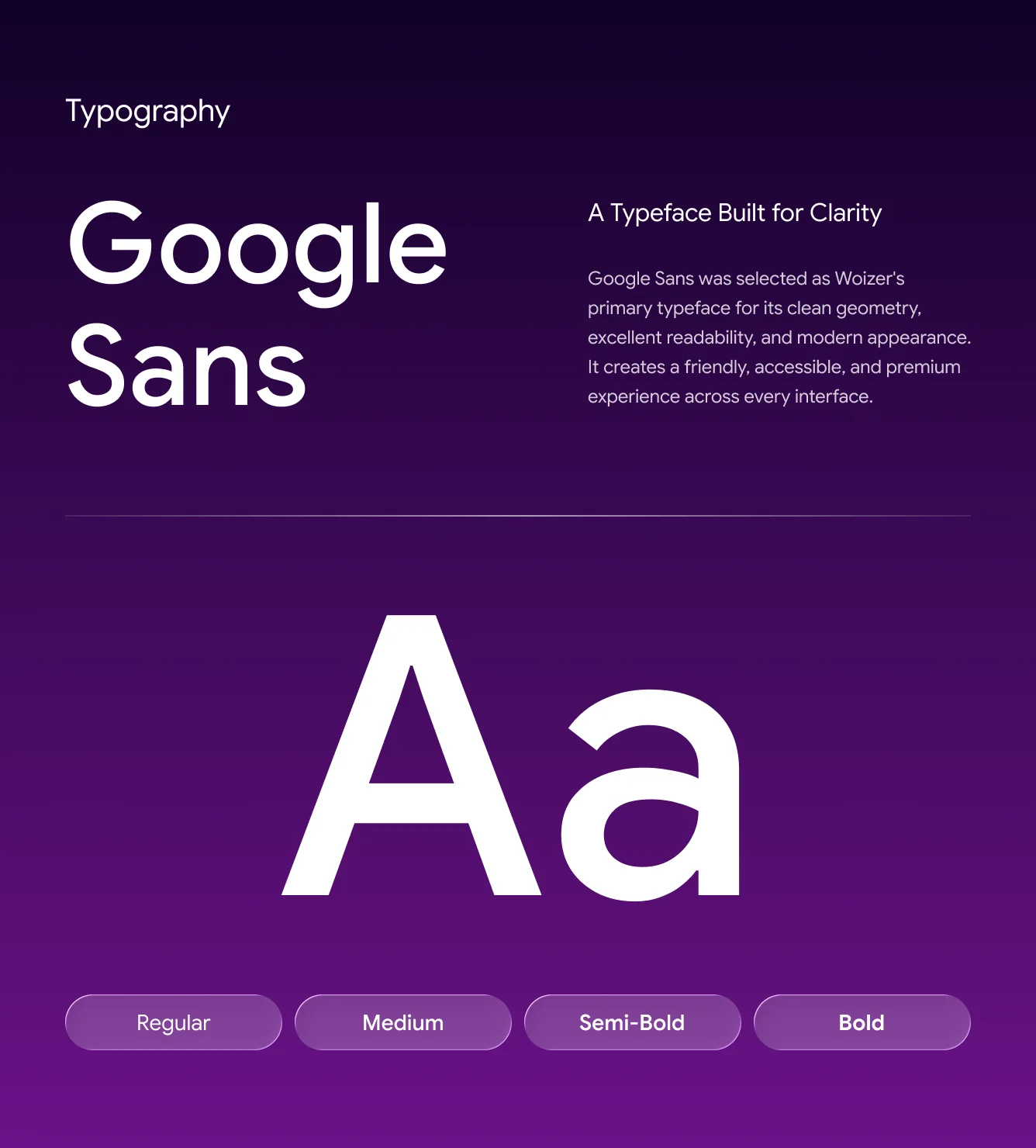
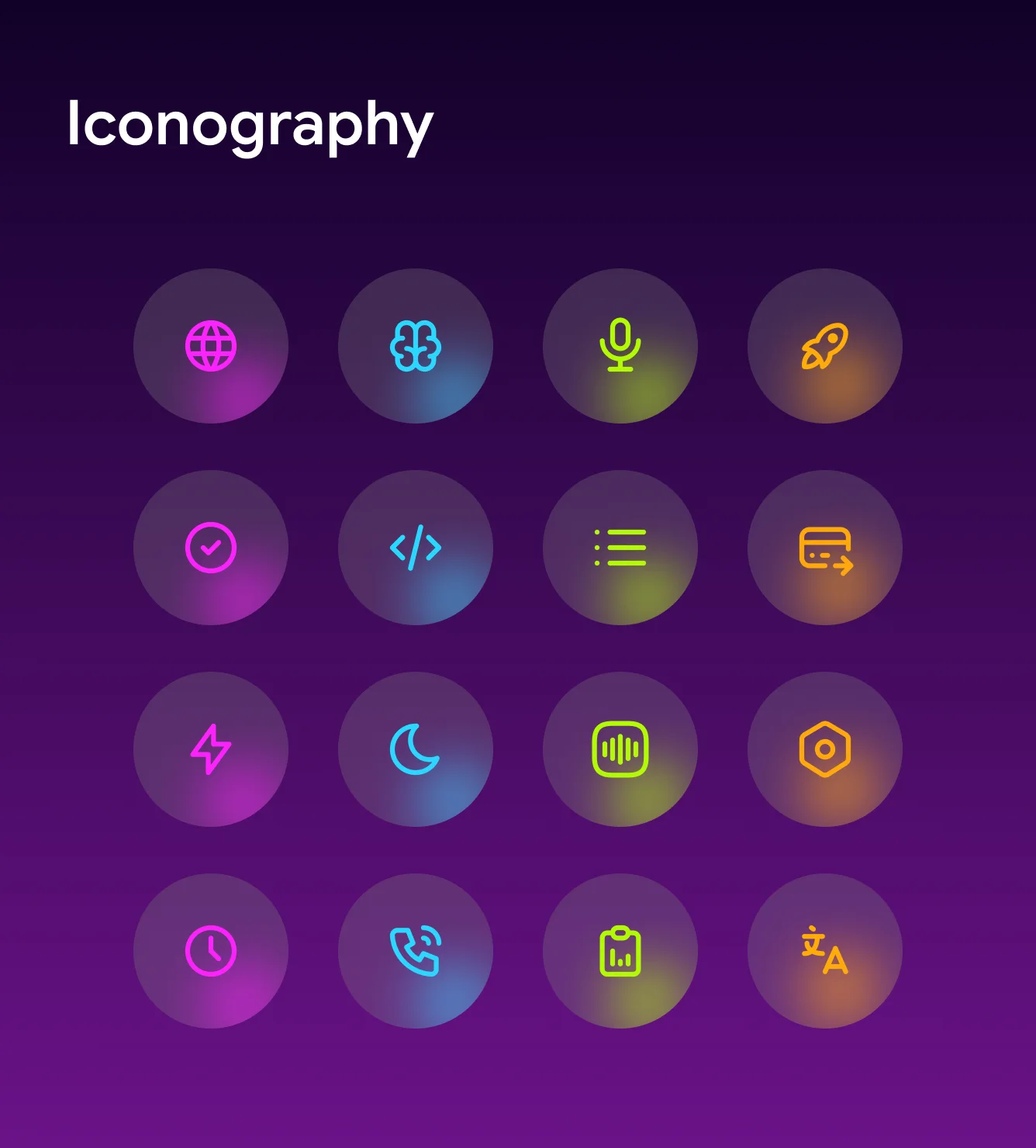
Typography is built around Google Sans, selected for its clean geometry, excellent readability, and contemporary character. Its balanced proportions complement the minimal interface, making complex information easier to scan and understand across dashboards, onboarding flows, and conversational experiences. Combined with a consistent design system, thoughtful spacing, and cohesive iconography, the visual language reinforces Woizer's mission of making conversational AI simple, accessible, and scalable for every business.
A Design System Built for Woizer
Woizer's design system was created to deliver a consistent, scalable, and intuitive experience across every touchpoint. From onboarding and AI agent configuration to deployment and analytics, every component follows a unified visual language that simplifies complex workflows while maintaining clarity and usability. The system empowers businesses to interact with AI confidently through thoughtful layouts, accessible interactions, and reusable interface patterns.
The visual foundation is centered around #7C3AED, representing innovation, intelligence, and trust. This primary color is complemented by clean neutral surfaces, subtle gradients, and refined shadows to create a modern SaaS experience with strong visual hierarchy. Google Sans serves as the primary typeface, providing exceptional readability and a contemporary personality across dashboards, forms, and conversational interfaces. A structured spacing system, reusable UI components, and consistent interaction patterns ensure that Woizer remains scalable, accessible, and visually cohesive as the platform continues to evolve.
UX Design for Smarter Learning Experiences
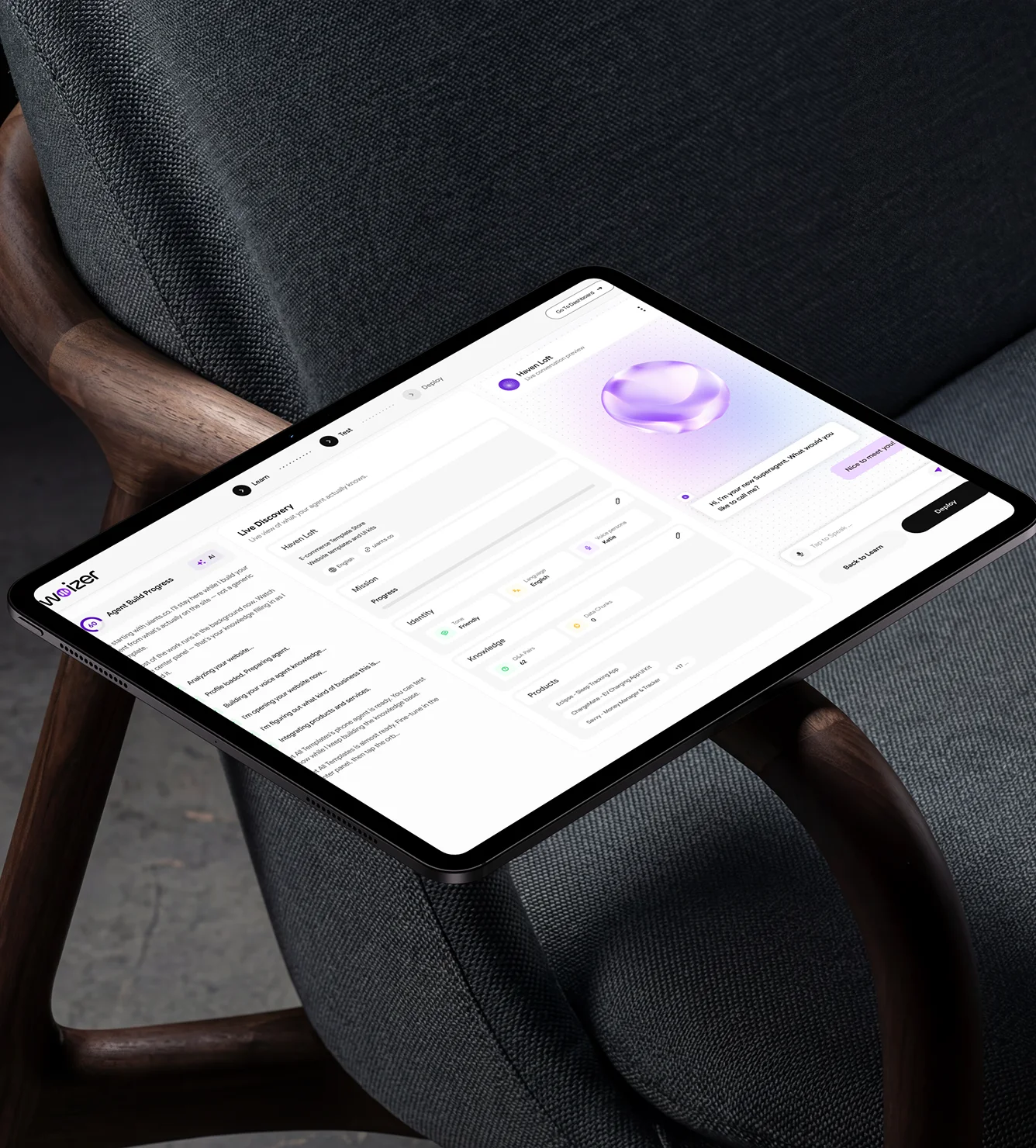
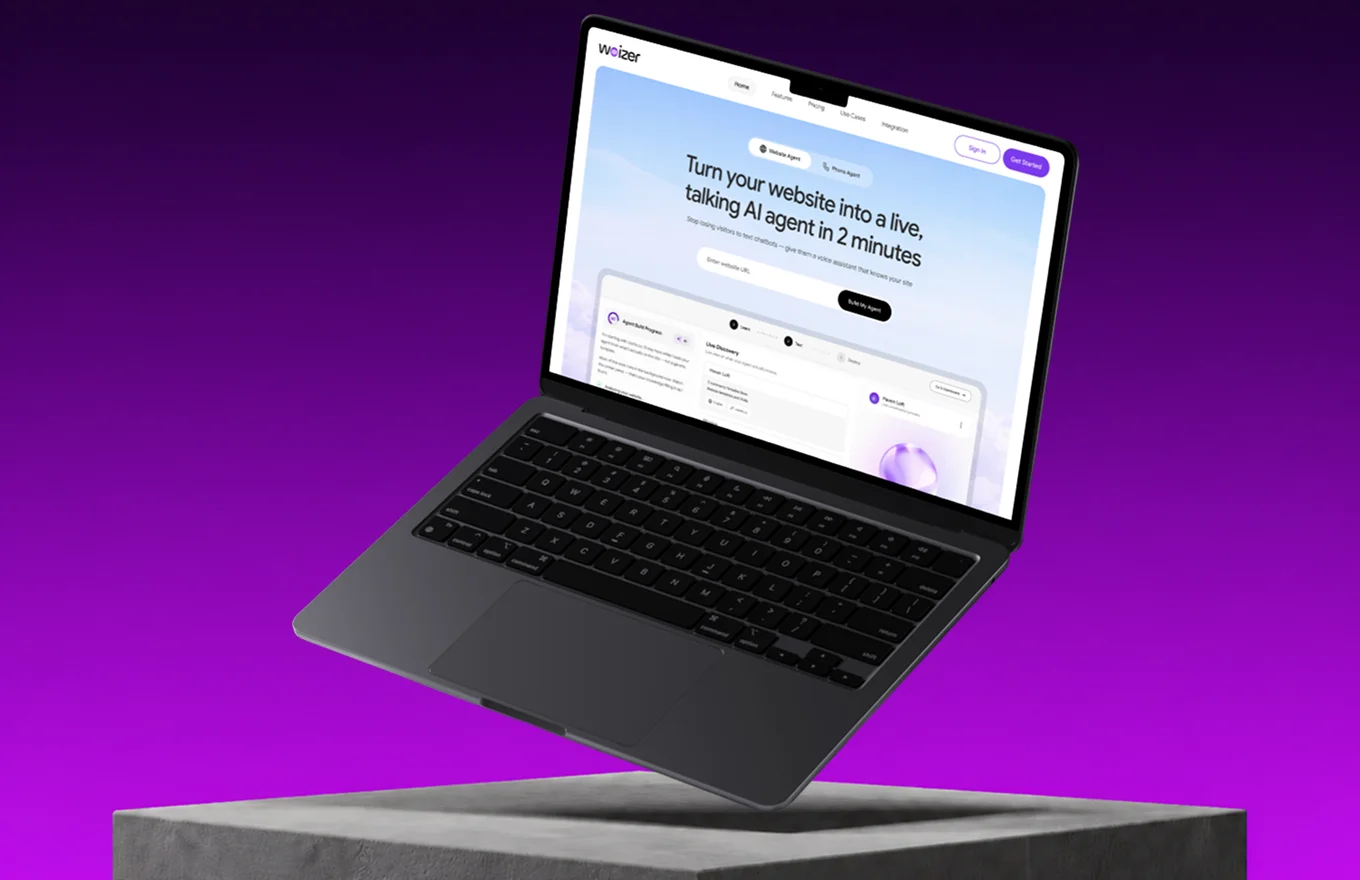
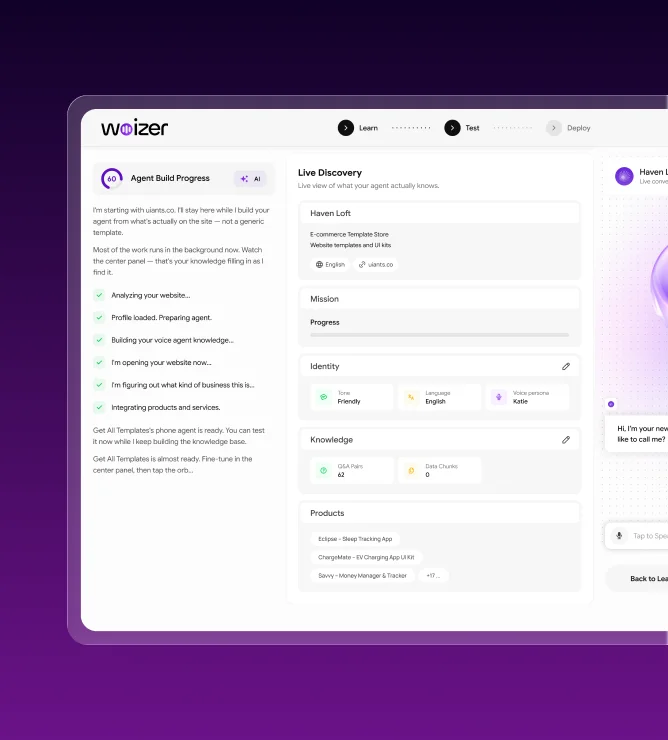
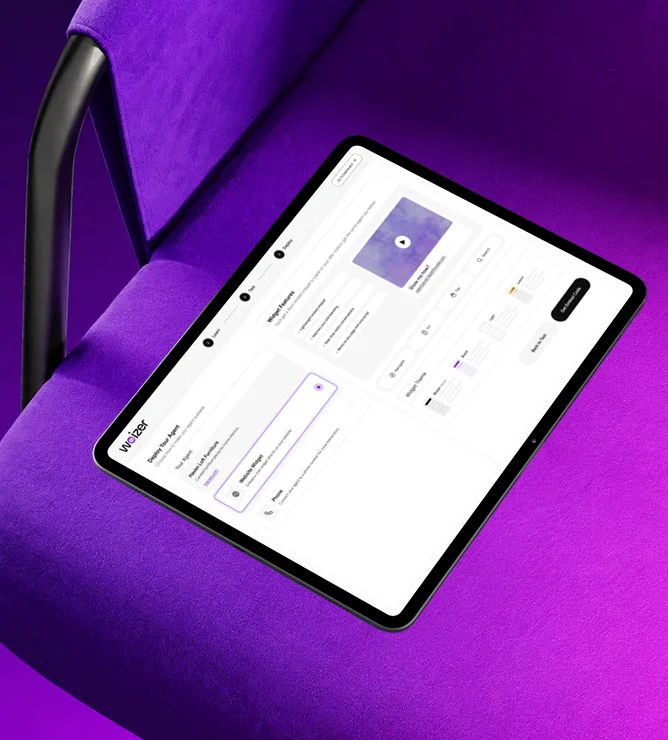
Woizer's user experience was designed to make AI voice automation simple, intuitive, and accessible for businesses of every size. Instead of requiring complex configurations or technical expertise, the platform guides users through a seamless journey—from connecting a website to deploying an intelligent voice agent in just a few steps. Every interaction focuses on reducing friction, increasing clarity, and building confidence throughout the setup process.
The interface combines conversational workflows, structured dashboards, real-time analytics, and intuitive navigation to simplify AI adoption. Consistent visual hierarchy, guided onboarding, and reusable design patterns help users configure, monitor, and optimize their voice agents effortlessly. Every experience is crafted to transform complex AI technology into a product that feels approachable, efficient, and ready for everyday business use.
Creating Intelligent Customer Experiences at Scale
Woizer reimagines customer support by replacing static websites with conversational AI. The redesigned experience enables businesses to launch voice agents effortlessly, deliver instant assistance, and provide human-like interactions that scale without increasing operational overhead.
- 1.Always-on conversations Customers receive instant assistance at any hour without relying on support availability.
- 2.Zero-friction onboarding Website content becomes the AI's knowledge base, eliminating manual training and setup.
- 3.Natural voice interactions Human-like conversations improve engagement and reduce customer effort. Consistent business knowledge: Every response is powered by a centralized, continuously updated knowledge source.
- 4.Operational efficiency AI automates repetitive inquiries, reducing response times and support costs.
- 5.Built for growth A scalable platform capable of supporting businesses as customer demand increases.