
Peer-to-Peer LogisticsPlatform connecting senders with verified travelers
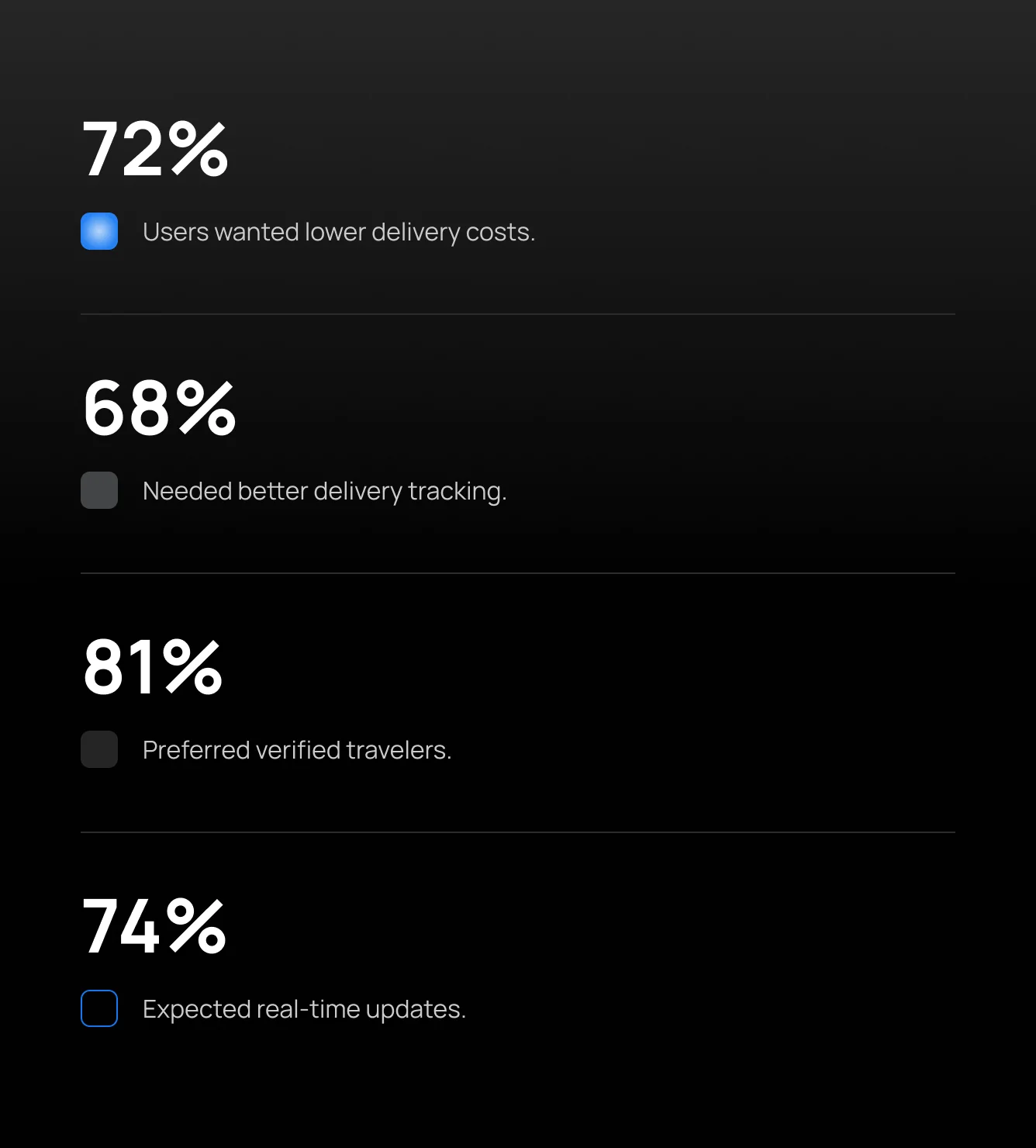
Users found traditional courier services too expensive.
Wanted more flexible and affordable delivery options.
Completed core delivery tasks successfully during usability testing.
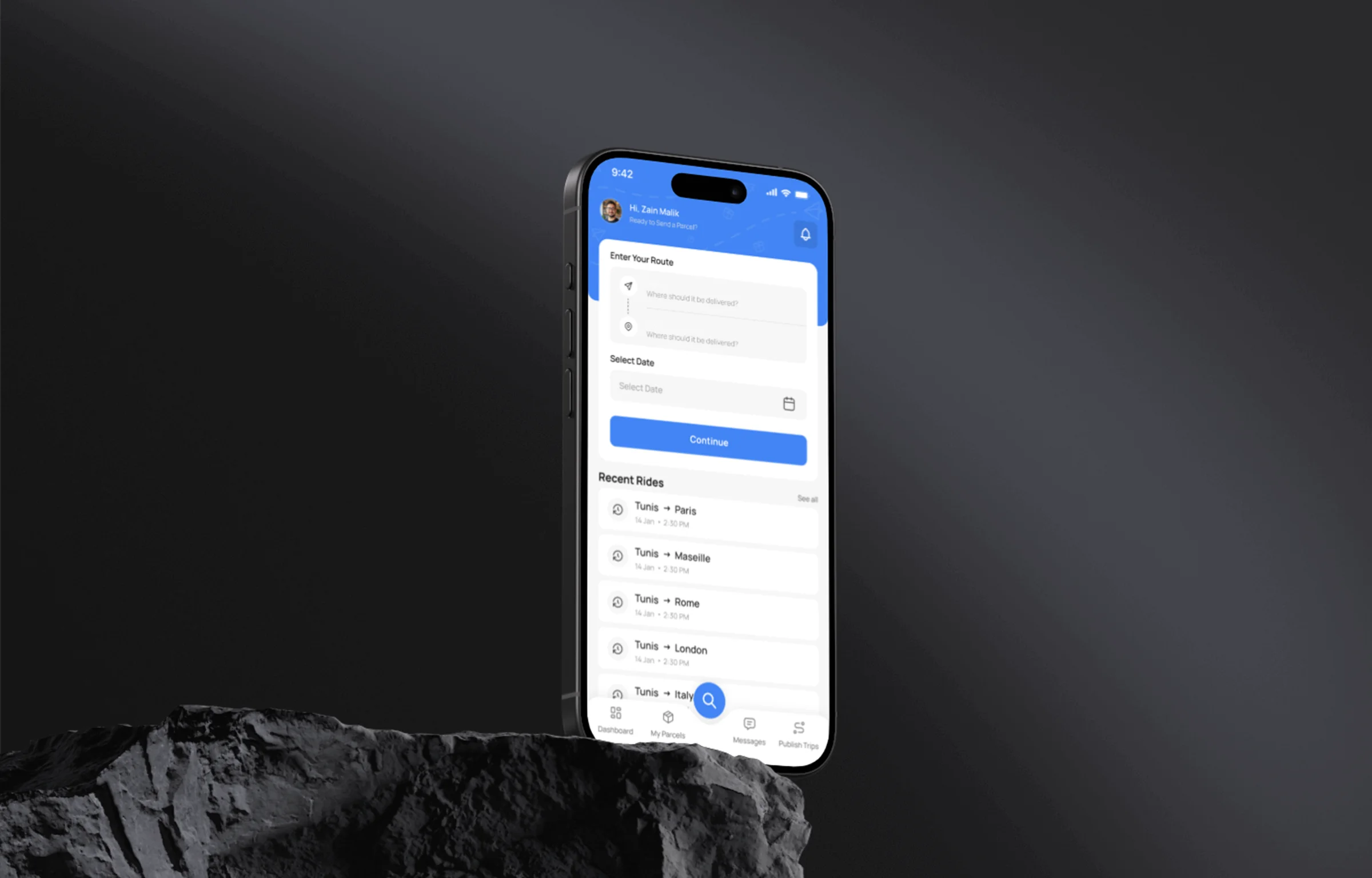
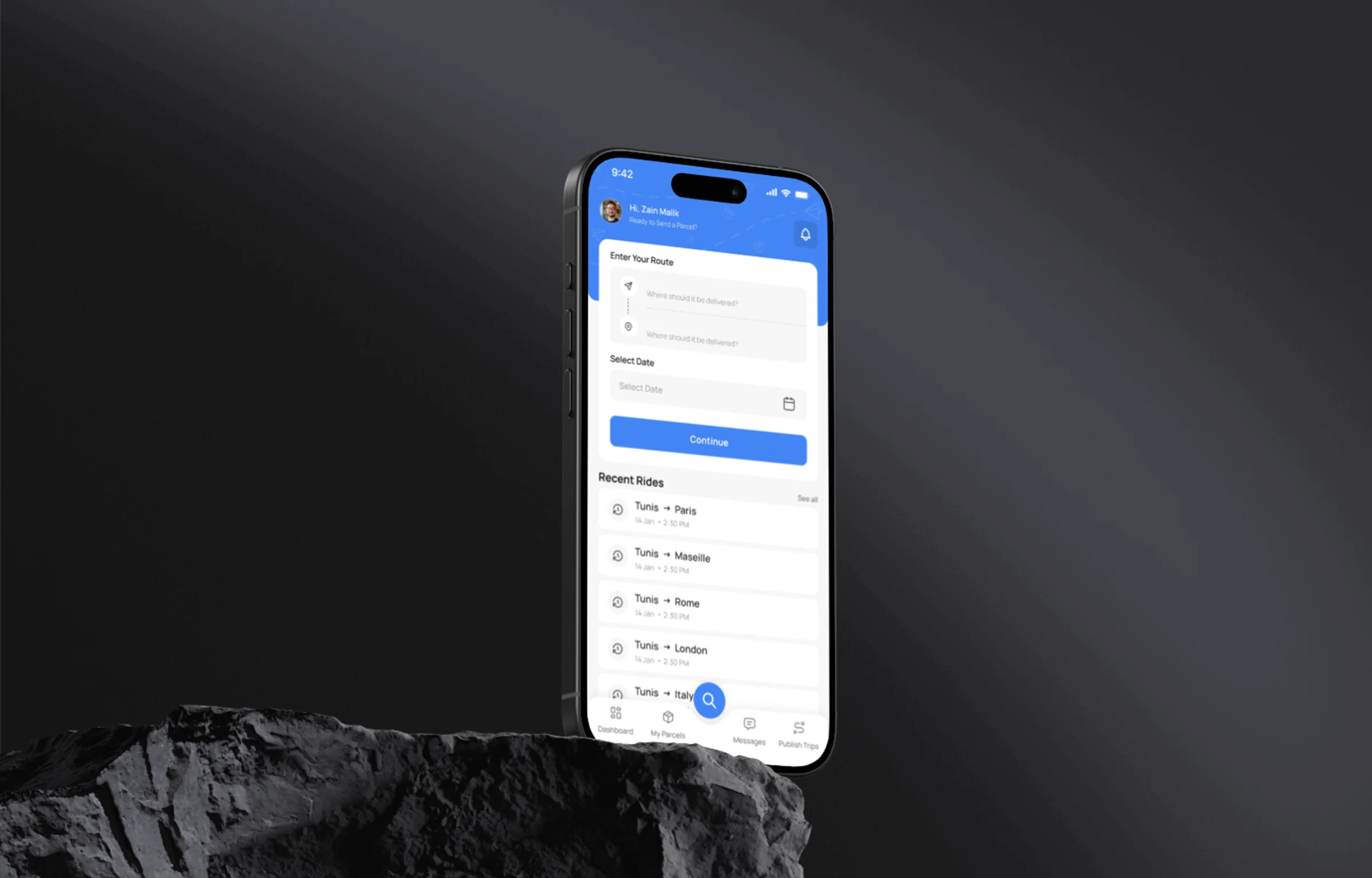

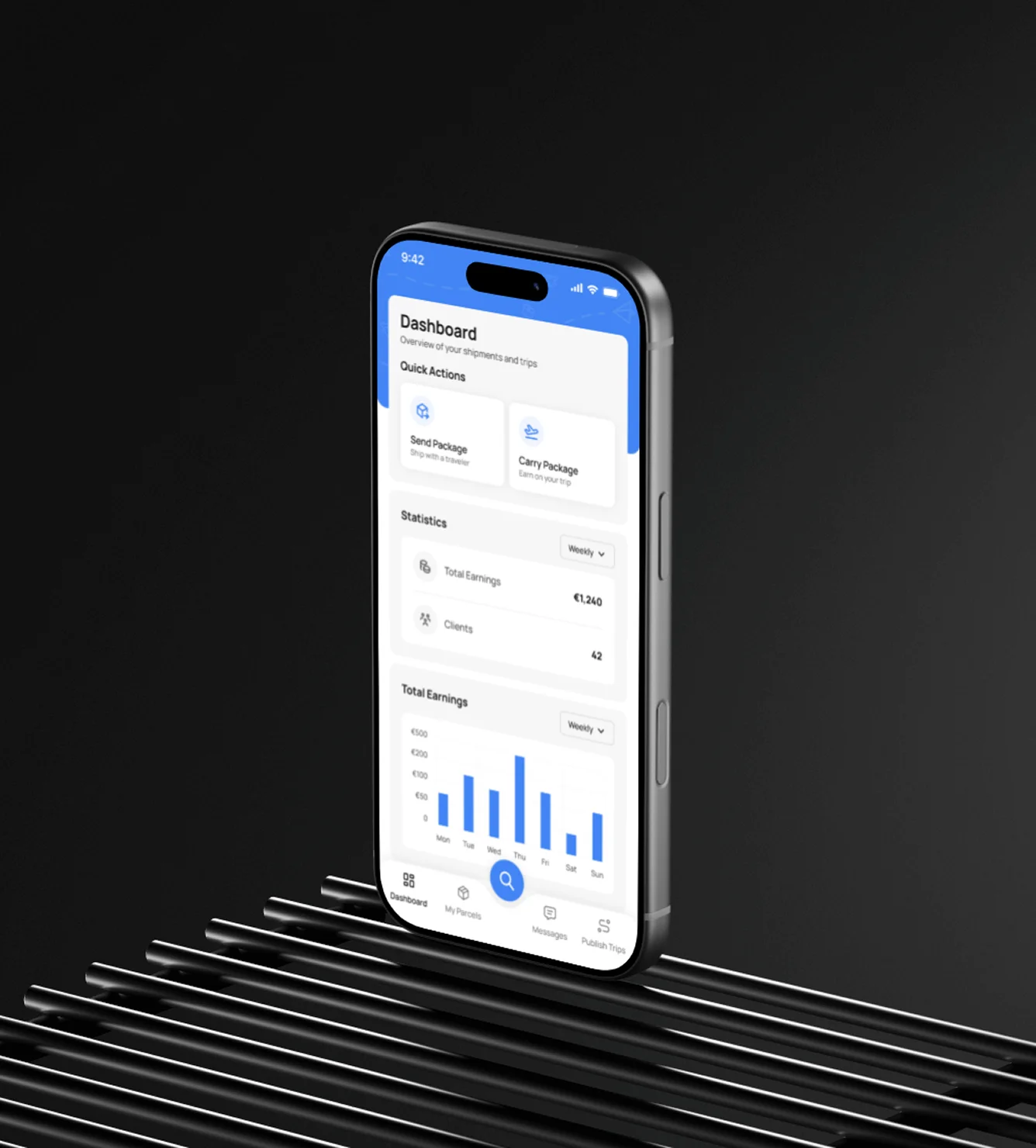
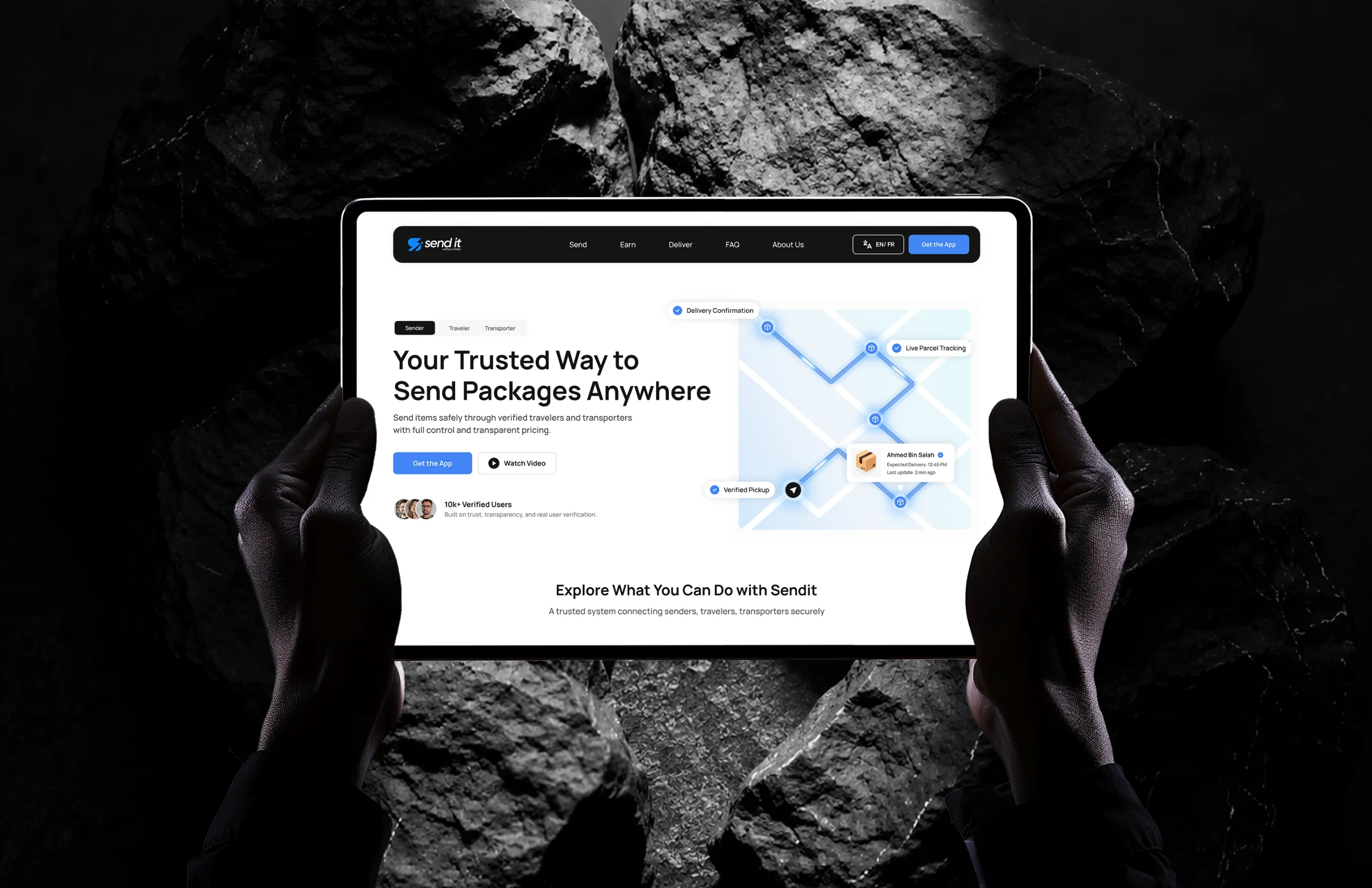
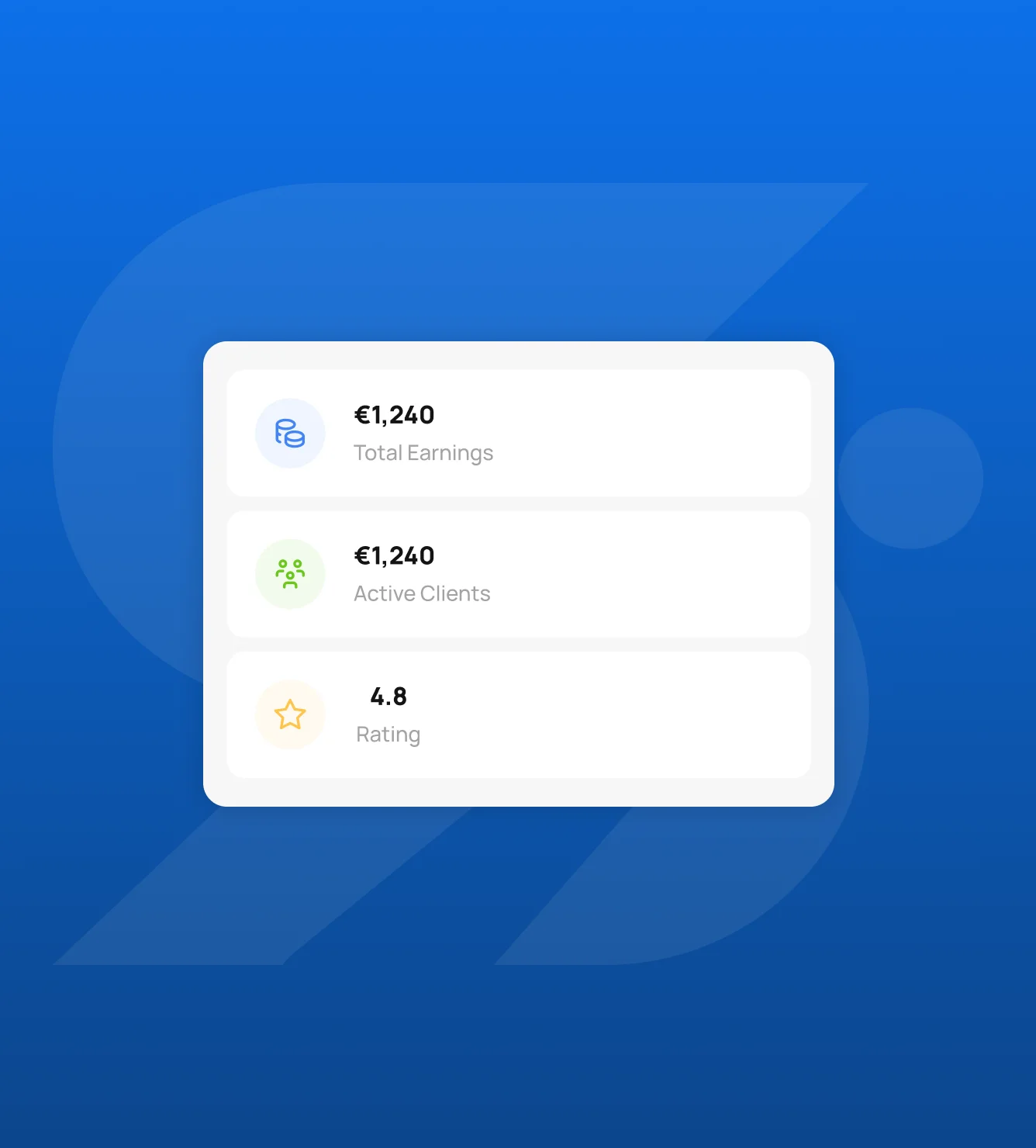
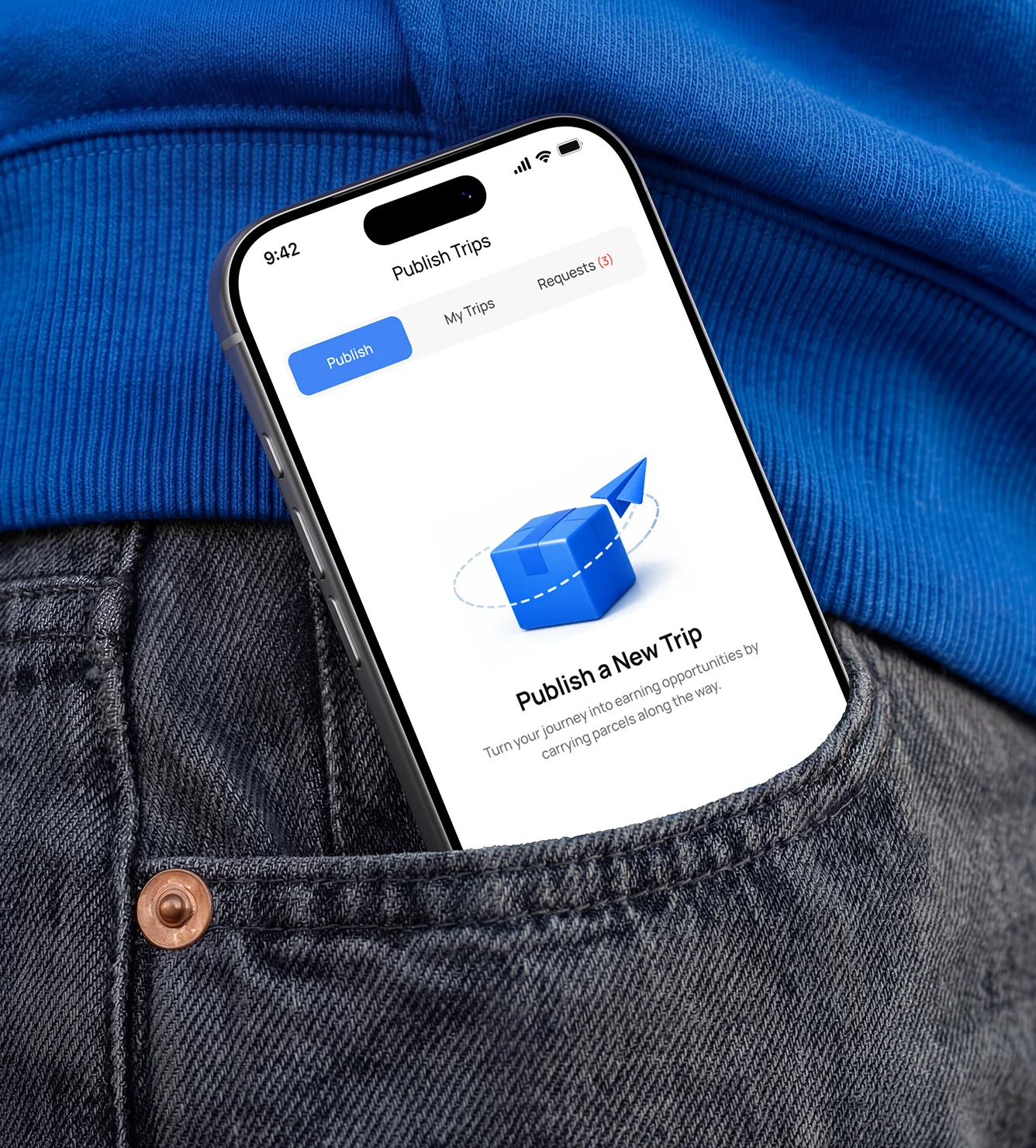
Send It is a peer-to-peer logistics platform that connects people who need to send packages with verified travelers already heading in the same direction. By utilizing available luggage space, the platform offers a faster, more affordable, and sustainable alternative to traditional courier services.
Most courier platforms are expensive, inflexible, and often require users to navigate lengthy processes with limited transparency. This creates frustration for both senders looking for reliable delivery options and travelers who have unused carrying capacity but no easy way to monetize it.
Challenges We Identified
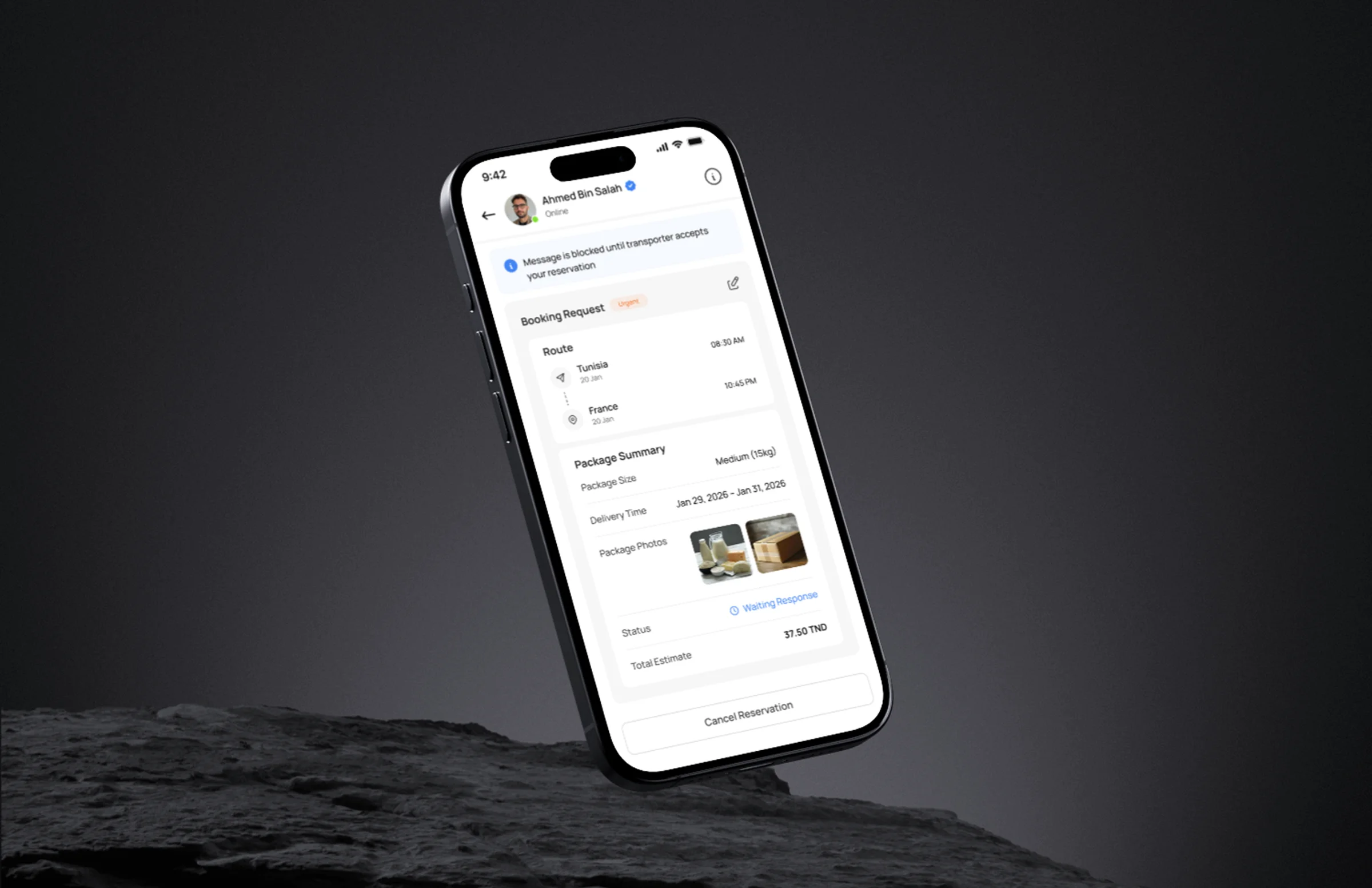
Sending packages through traditional courier services is often expensive, time-consuming, and inflexible, especially for individuals and small businesses. At the same time, thousands of travelers make daily trips with unused luggage space, yet there is no trusted platform that connects them with people who need affordable and secure package delivery. This gap results in missed earning opportunities for travelers and higher shipping costs for senders.
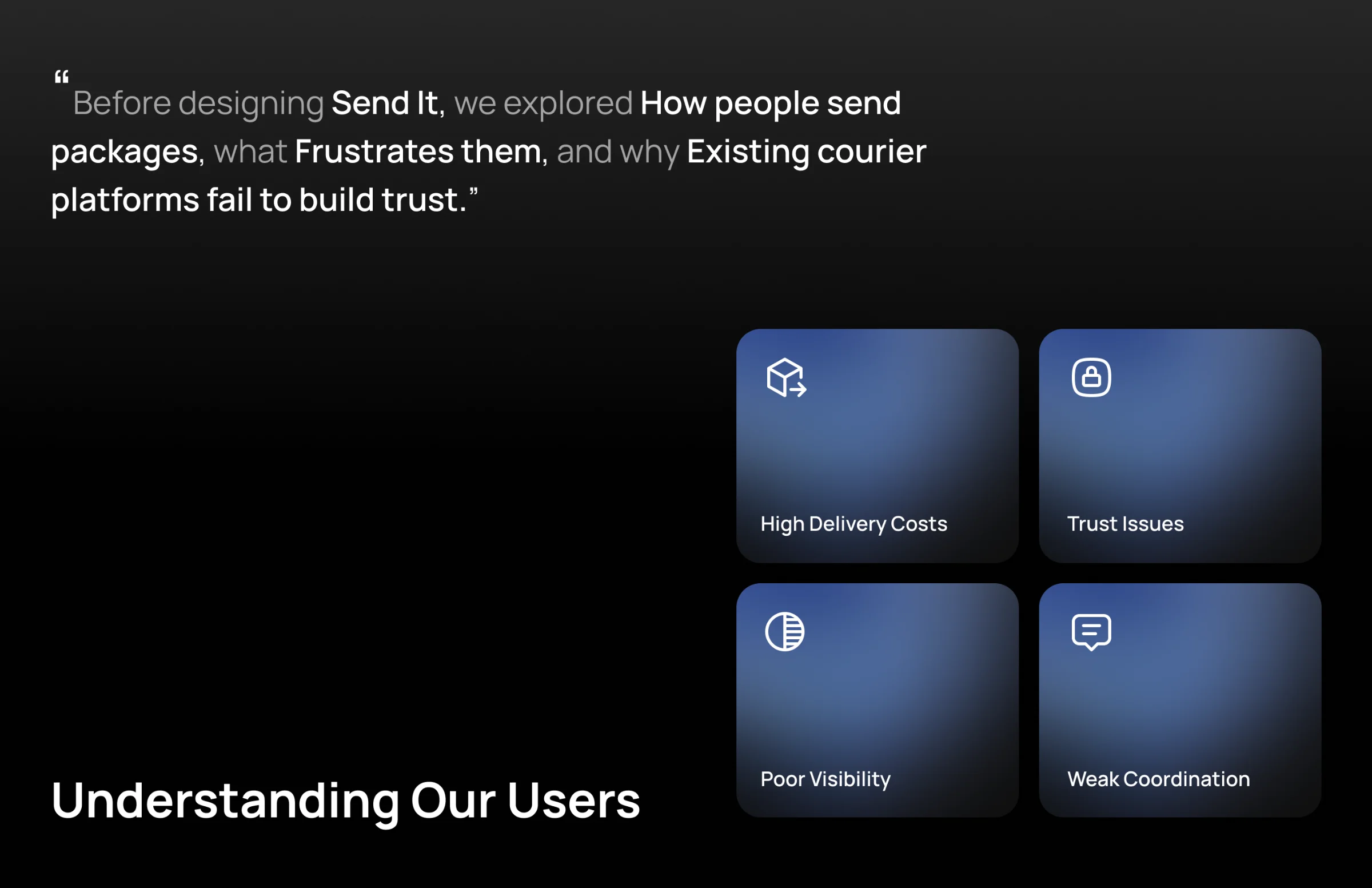
During our research, we found that users' biggest concerns were trust, pricing transparency, visibility, and delivery visibility. Existing solutions lacked a seamless experience that balanced security with simplicity. Send It was designed to bridge this gap by creating a trusted peer-to-peer logistics marketplace where verified travelers and senders can connect confidently and complete deliveries with ease.
- 1.Costly Traditional courier services charge high fees for personal and international deliveries.
- 2.Unused Travelers' available luggage space remains unutilized despite growing delivery demand.
- 3.Trust Users hesitate to send valuable packages through unverified individuals.
- 4.Visibility Limited shipment tracking creates uncertainty throughout the delivery process.
- 5.Communication Poor coordination between senders and travelers causes delivery delays.
- 6.Complexity Existing courier platforms require lengthy and confusing booking processes.
- 7.Security Lack of verification increases concerns about fraud, theft, and package safety.
- 8.Sustainability Separate delivery trips increase costs, fuel consumption, and carbon emissions.
How We Solved It
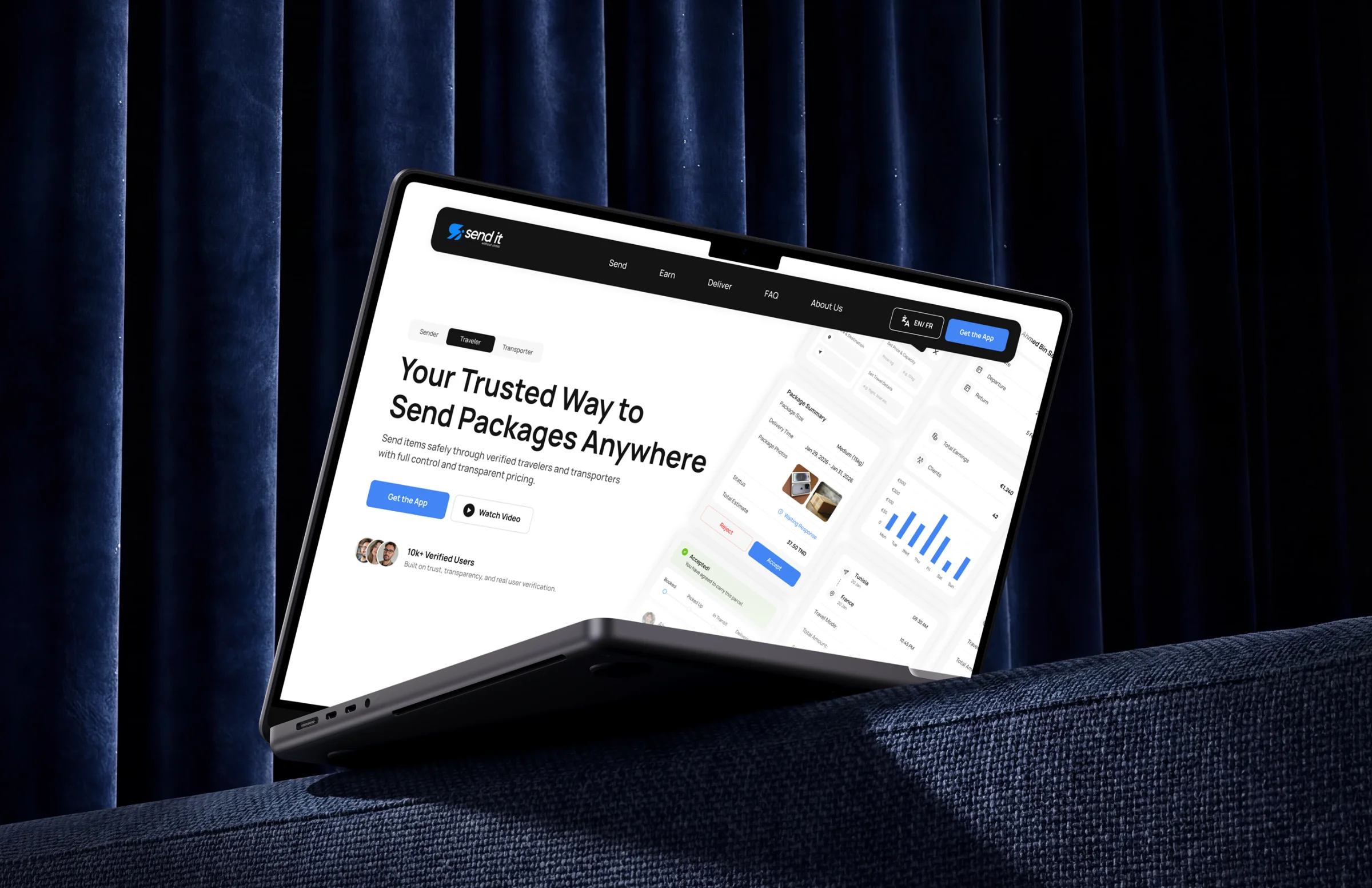
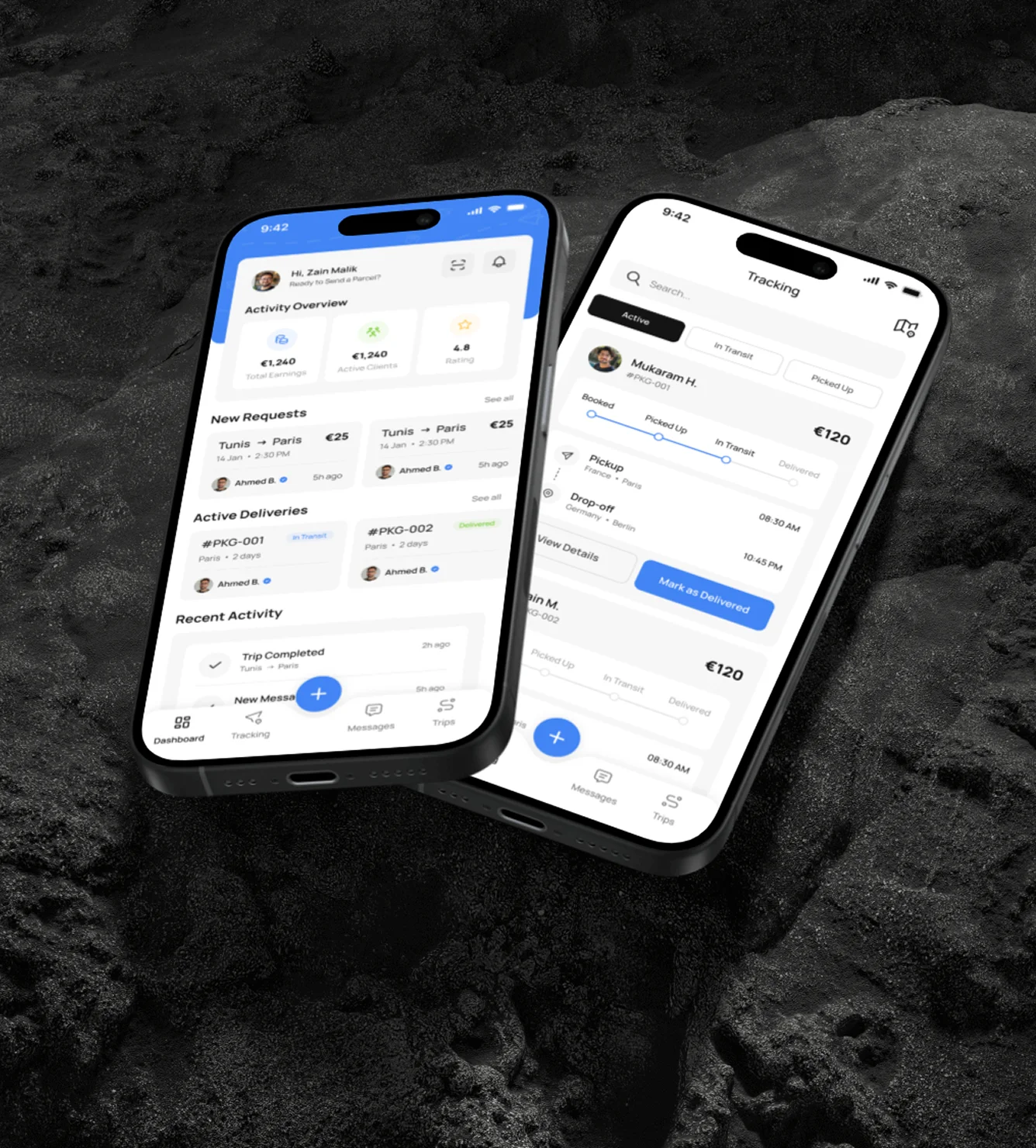
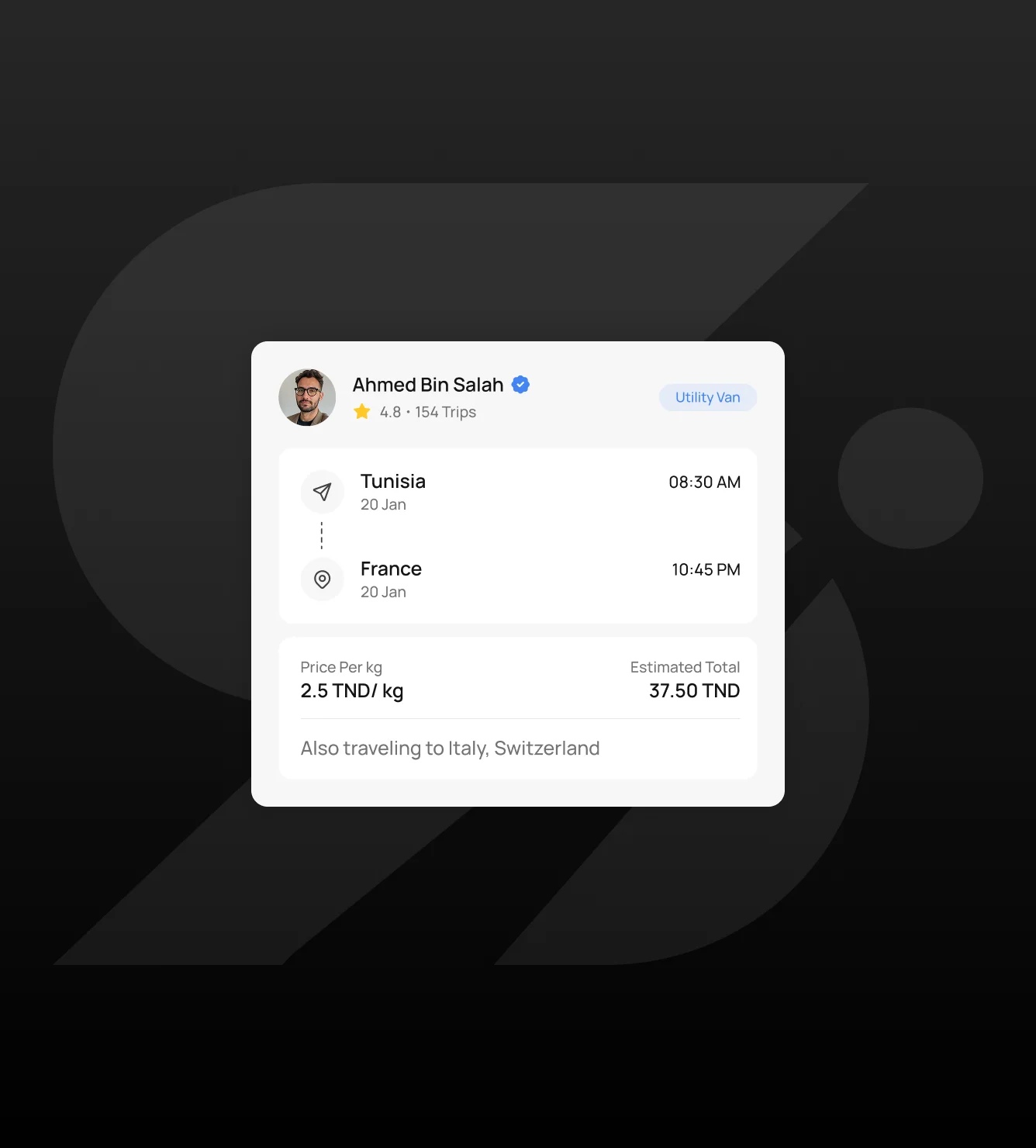
To address the challenges of traditional courier services, we designed Send It, a peer-to-peer logistics platform that connects verified travelers with people who need to send packages along the same route. By utilizing unused luggage space, the platform provides a faster, more affordable, and sustainable delivery experience while creating earning opportunities for travelers.
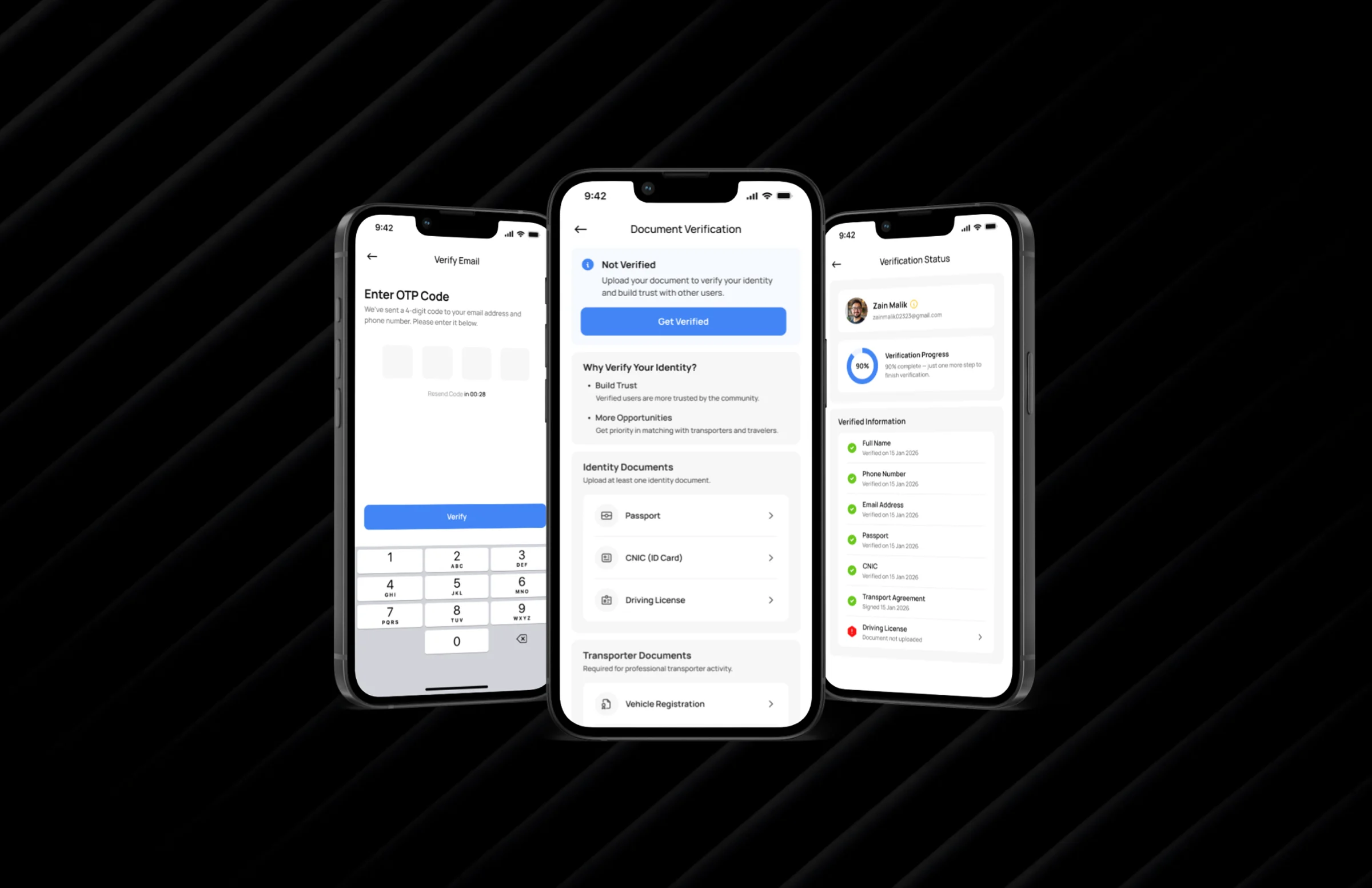
- 1.Verification Verified profiles build trust and ensure safer package deliveries.
- 2.Matching Smart route matching connects senders with suitable travelers instantly.
- 3.Tracking Real-time delivery updates keep users informed throughout the journey.
- 4.Pricing Transparent pricing eliminates hidden costs and unexpected delivery charges.
- 5.Messaging In-app chat enables quick and secure communication between users.
- 6.Earnings Travelers monetize unused luggage space during their existing trips.
- 7.Security Secure handovers and confirmations protect packages from pickup to delivery.
- 8.Experience Intuitive workflows simplify booking, tracking, and delivery management.
How we approached the UX design
Our Send It design process followed a human-centered approach focused on solving real logistics and package delivery challenges. Through user research, journey mapping, design exploration, and usability testing, we created a secure and intuitive platform that connects verified travelers with people who need to send packages quickly and affordably.
Research & Discovery
We explored delivery habits, identified pain points, and evaluated logistics opportunities.
- We explored delivery habits, identified pain points, and evaluated logistics opportunities.
- User interviews
- Pain point mapping
- Logistics market research
UX Strategy & Planning
We defined user journeys, prioritized essential features, and structured the platform architecture.
- User persona creation
- User journey mapping
- Information architecture
- Feature prioritization
Design & Prototyping
We designed intuitive interfaces emphasizing trust, simplicity, and seamless package delivery experiences.
- Low & High Fidelity Wireframes
- UI Design System
- Interactive Prototypes
- Micro-interactions
Testing & Refinement
We tested user flows, refined interactions, and improved usability through continuous feedback.
- Usability testing
- Design iterations
- UX writing refinement
- Developer handoff

UX Research & Design Artifacts
We conducted comprehensive research to understand how users send packages, interact with courier services, and perceive trust in peer-to-peer delivery platforms. Our research focused on identifying friction points, improving transparency, and designing an experience that feels reliable, efficient, and easy to use for both travelers and senders.
- User surveys Surveyed 50+ travelers and package senders. 72% said courier services were too expensive, while 64% wanted more flexible delivery options.
- User interviews Conducted 18 in-depth interviews with frequent travelers and online sellers. 69% expressed concerns about trust and package security when using peer-to-peer delivery services.
- Usability testing Tested early prototypes with 20 participants. 85% successfully completed key tasks without assistance after iterative improvements.
- Pain point mapping dentified major friction points including high shipping costs, limited delivery visibility, complicated booking processes, and lack of real-time communication.
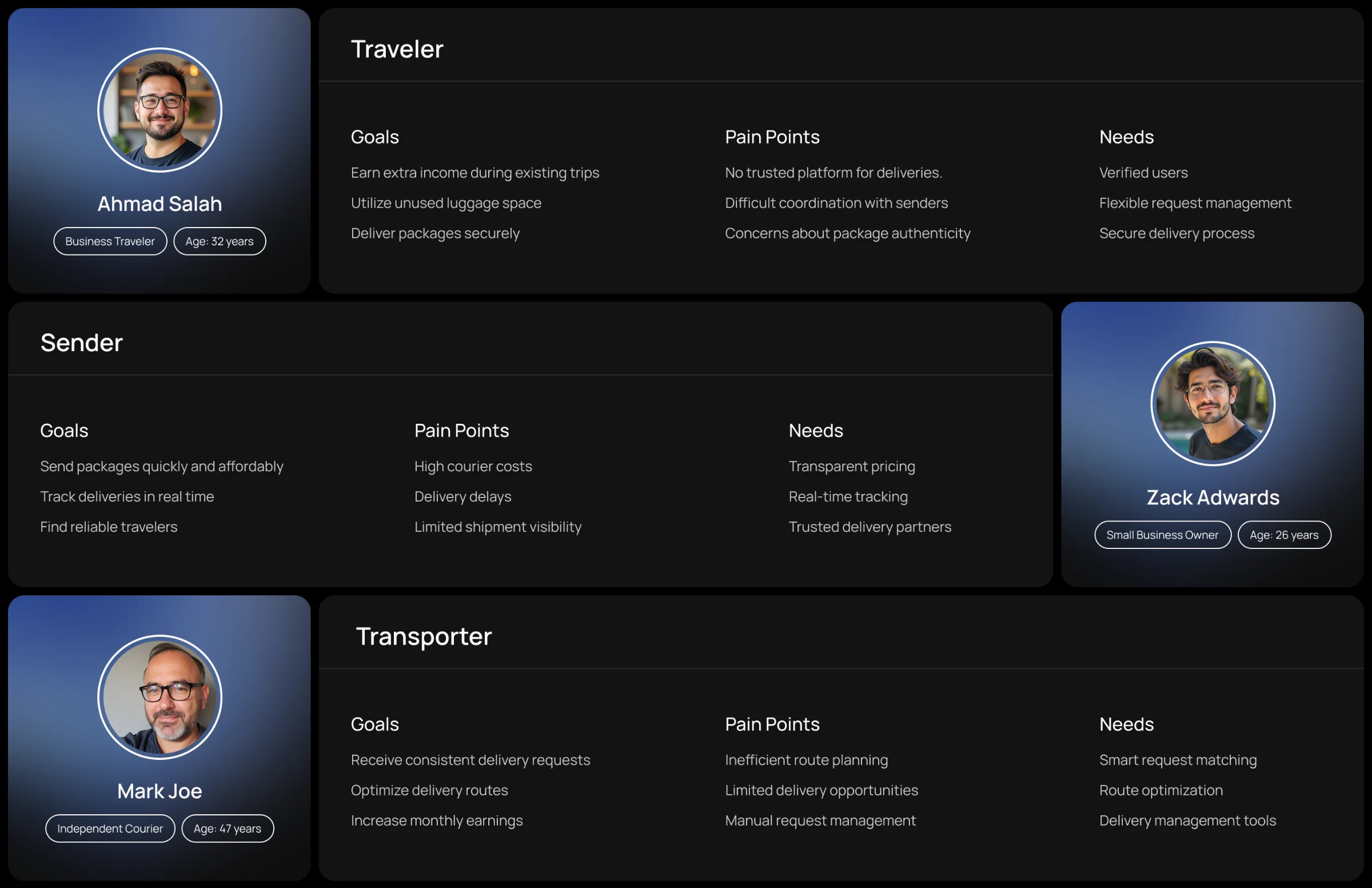
- Design artifacts Created user personas, empathy maps, journey maps, task flows, information architecture, wireframes, interactive prototypes, and a complete design system to guide product development.
Visual Identity & Brand Story
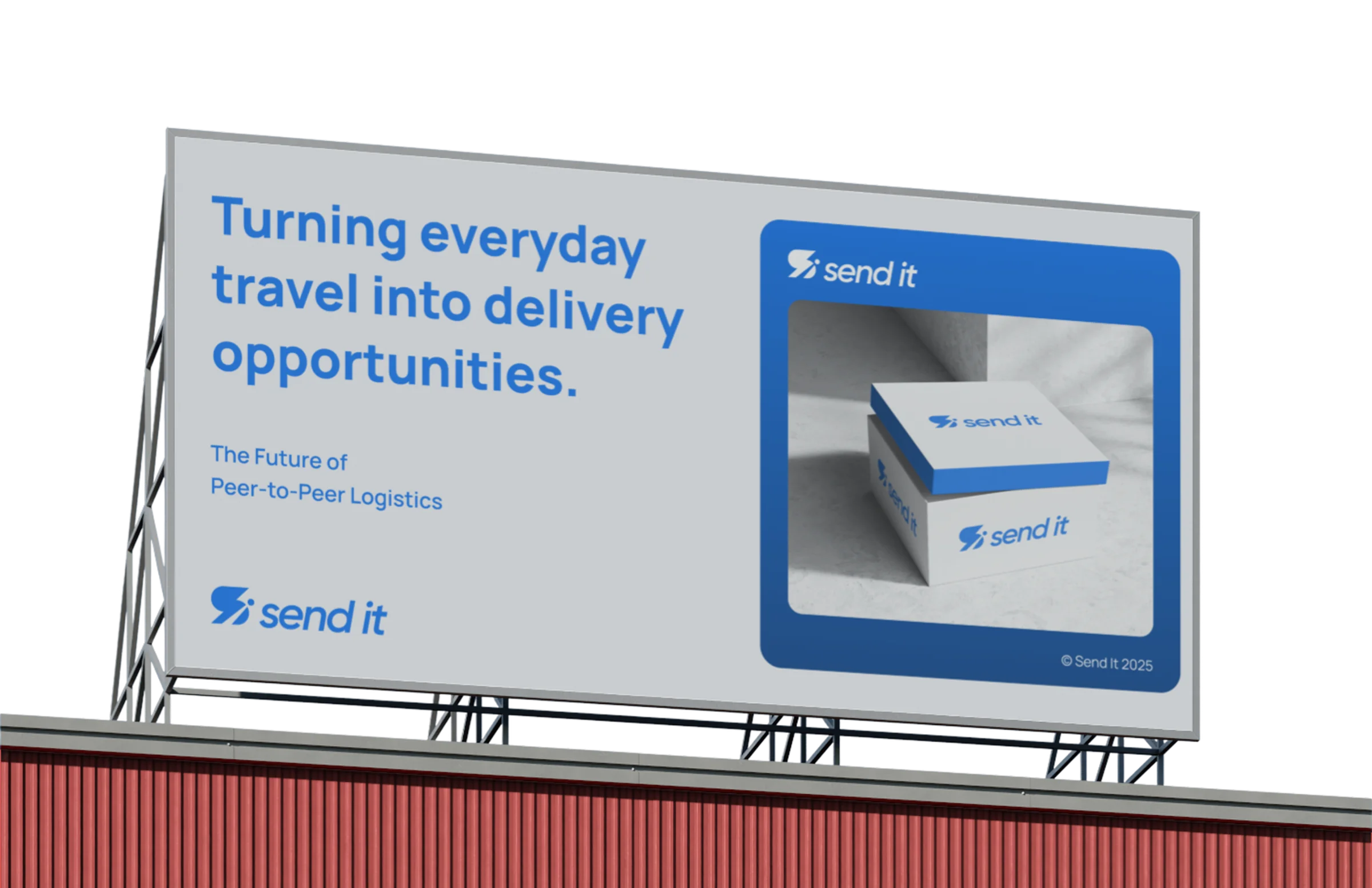
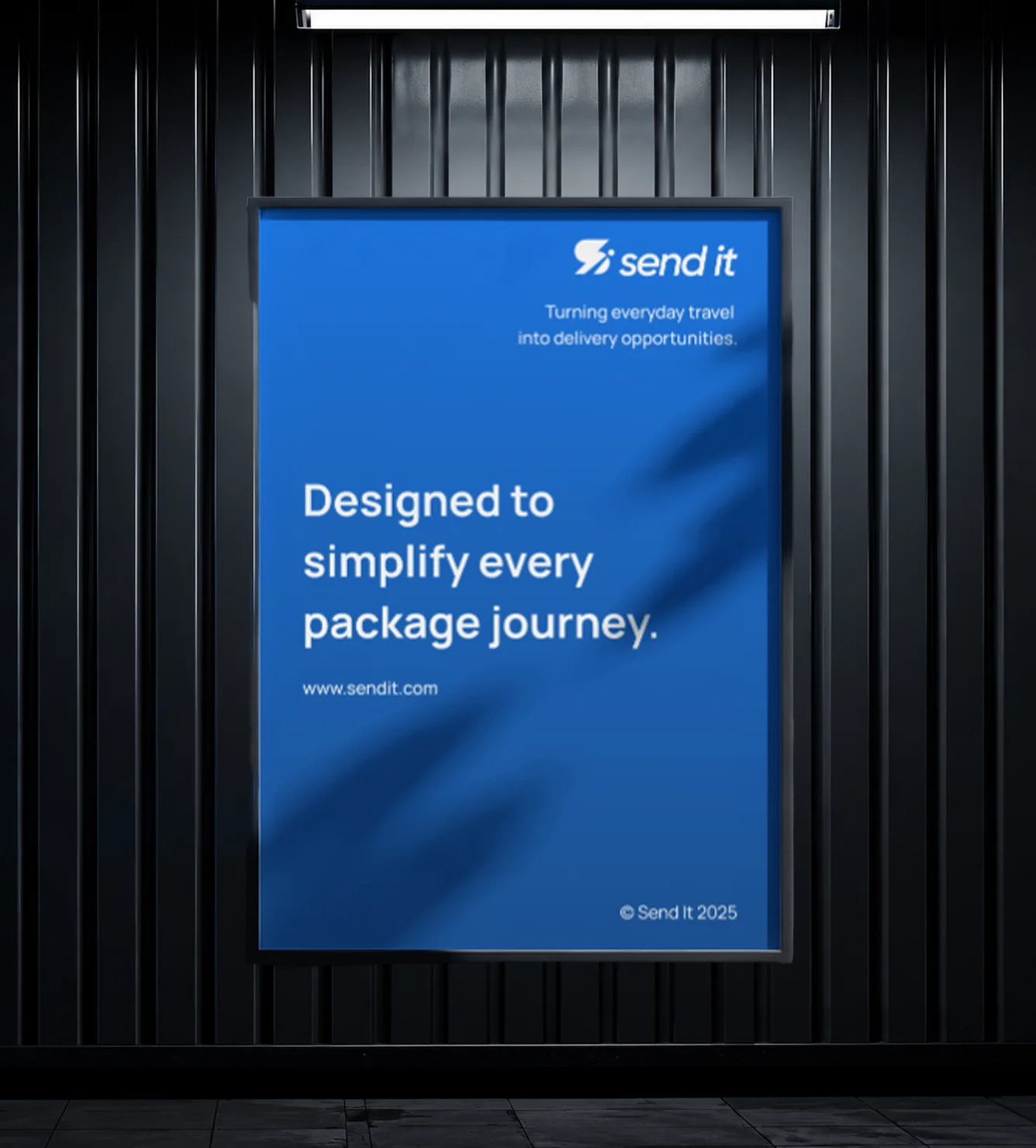
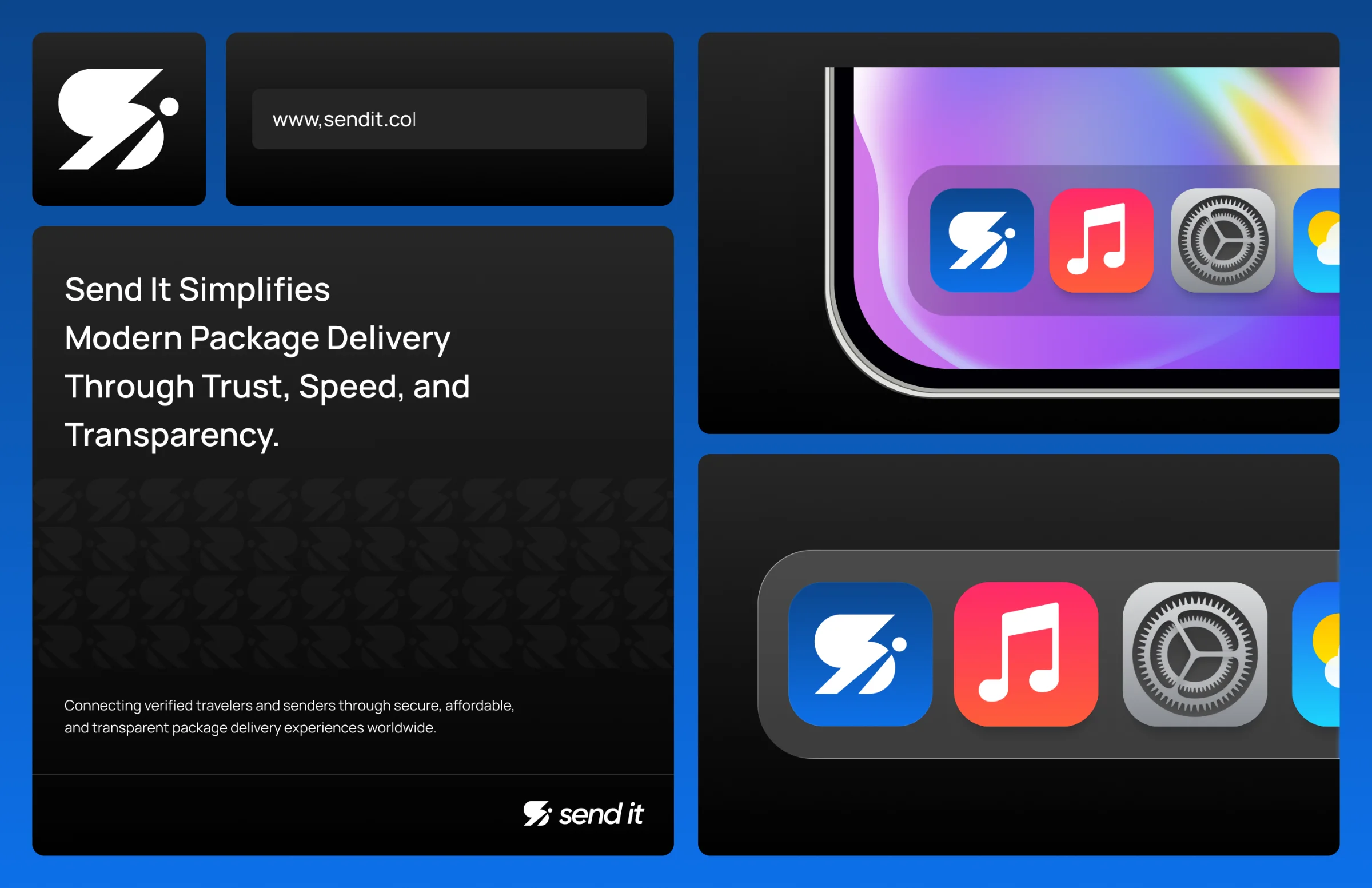
Send It was designed to feel modern, reliable, and effortless from the very first interaction. Every visual decision reinforces trust, speed, and transparency, helping users confidently send or deliver packages without unnecessary complexity. The clean interface, balanced layouts, and consistent components create an experience that feels approachable for both travelers and senders.
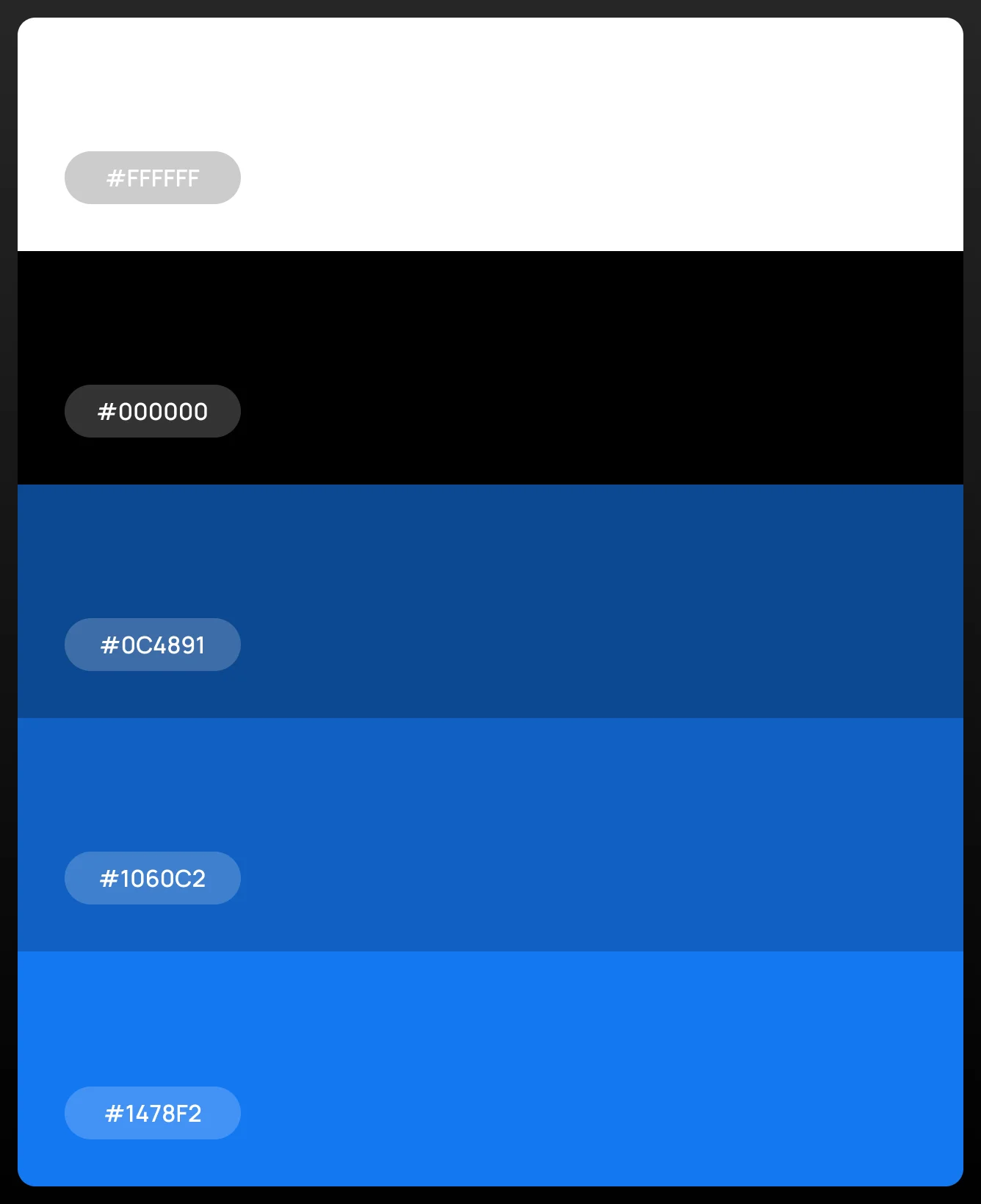
Our visual identity is centered around #1478F2, representing trust, reliability, and seamless connectivity throughout the delivery journey. #000000 provides strong contrast and reinforces clarity, confidence, and a premium aesthetic. Supporting neutral tones maintain visual balance while allowing important actions and information to stand out naturally.
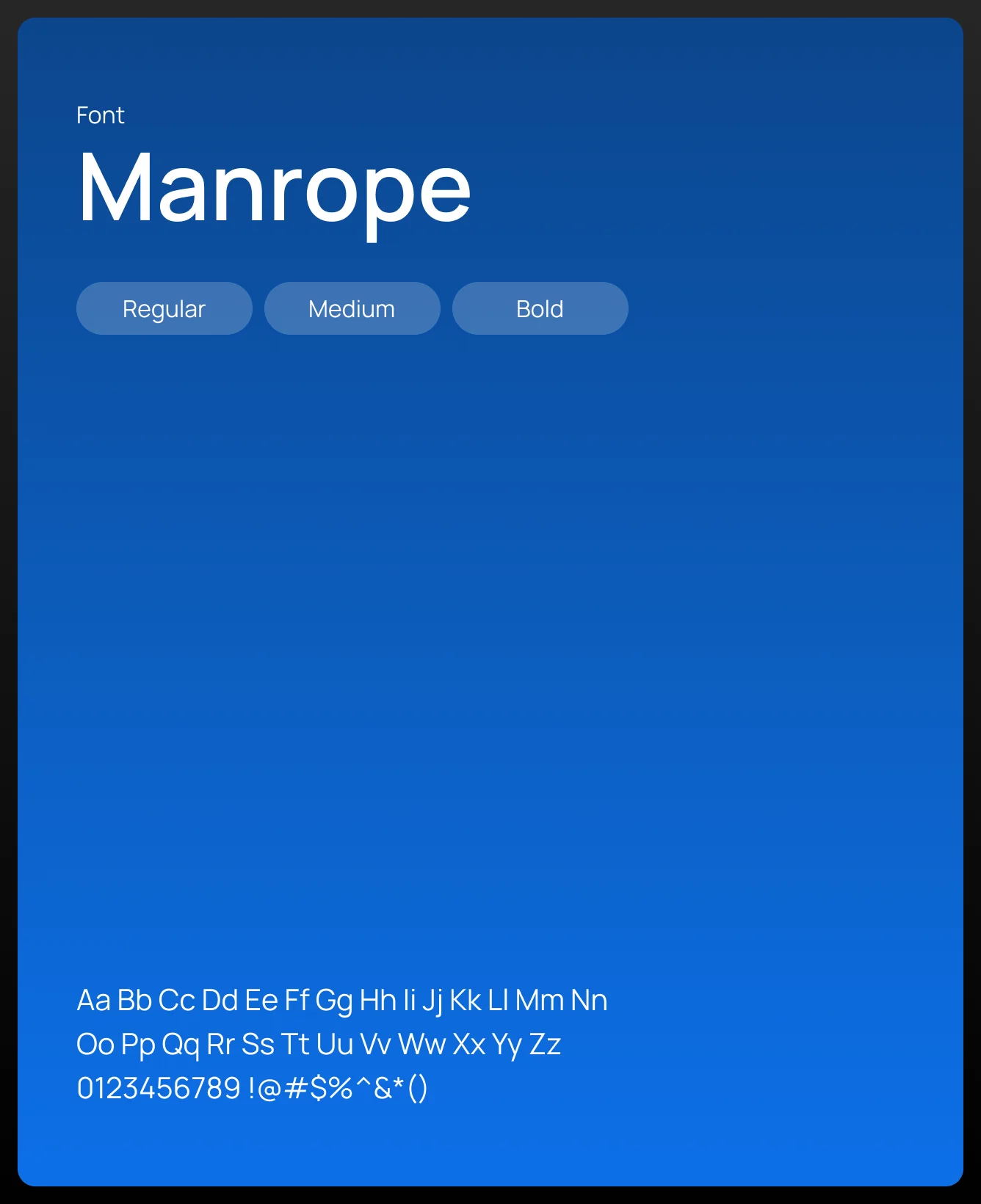
Typography uses Manrope, chosen for its modern geometric style, excellent readability, and clean appearance across every screen size. Its balanced proportions enhance hierarchy and make complex delivery information easy to scan. The brand story is simple: Send It transforms everyday travel into trusted delivery opportunities, making package shipping faster, more affordable, and accessible for everyone.

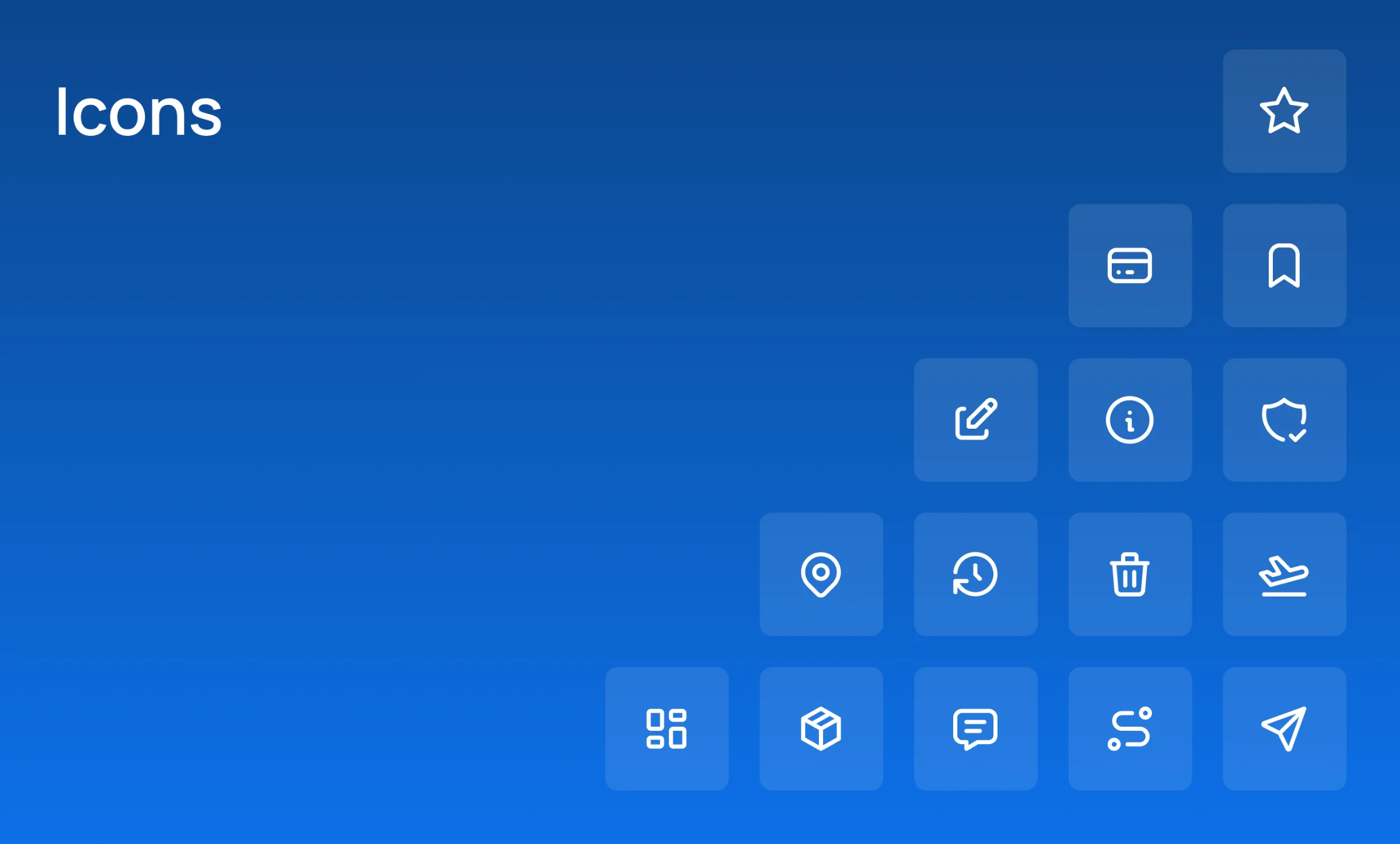
A Design System Built for Send It
Send It's design system establishes a consistent visual language across the platform by standardizing colors, typography, spacing, components, and interaction patterns. Every element was designed to create a familiar, intuitive experience for senders, travelers, and transporters while maintaining clarity across both mobile and web interfaces.
The system is built around a clean color palette led by #1478F2 as the primary brand color and #000000 for strong visual hierarchy and readability. Manrope serves as the primary typeface, providing excellent legibility and a modern appearance across all interface sizes. An 8-point spacing system, reusable UI components, consistent iconography, and unified design patterns ensure the product remains scalable, maintainable, and visually consistent as new features are introduced.
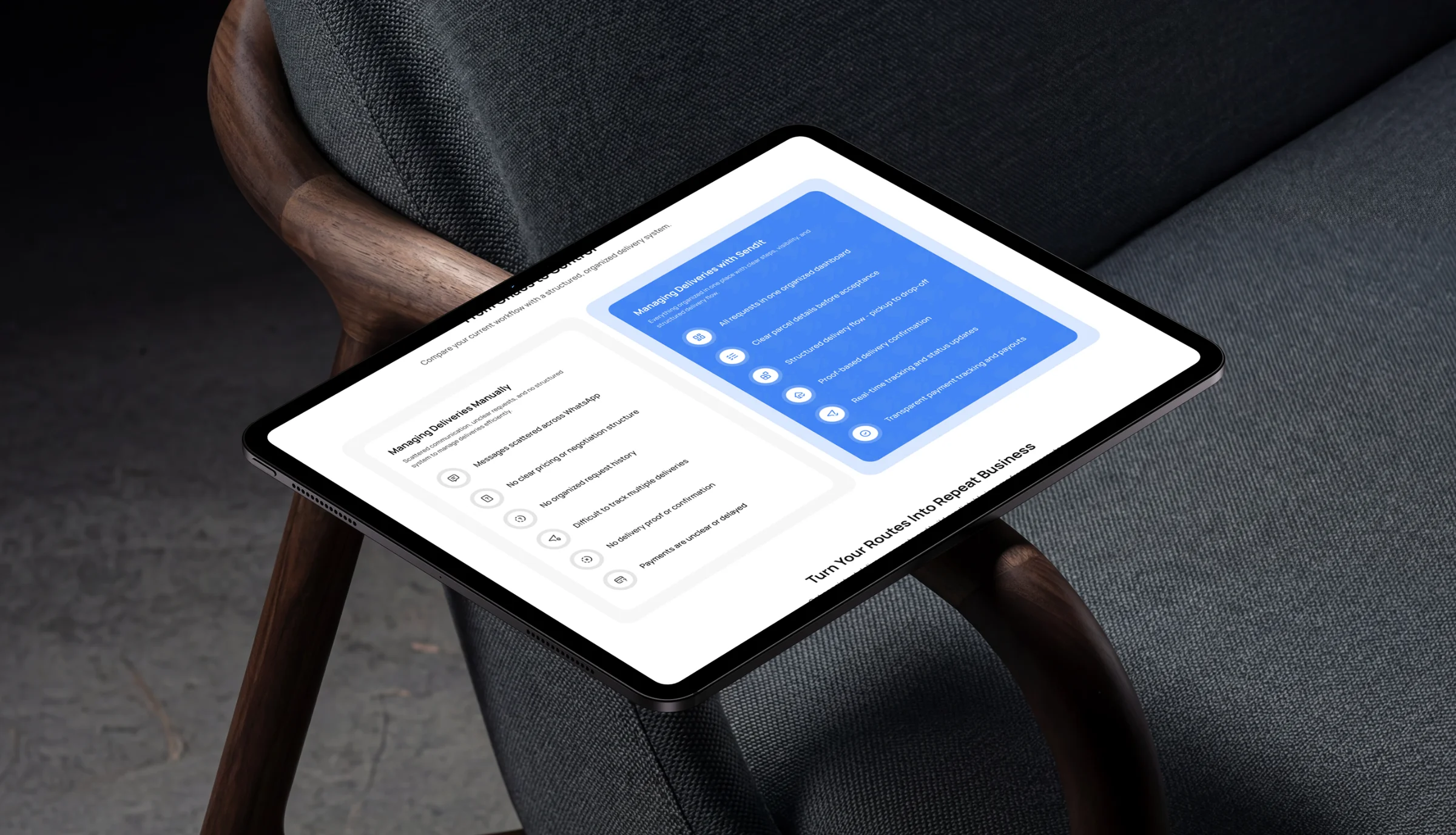
UX Design for Smarter Package Deliveries
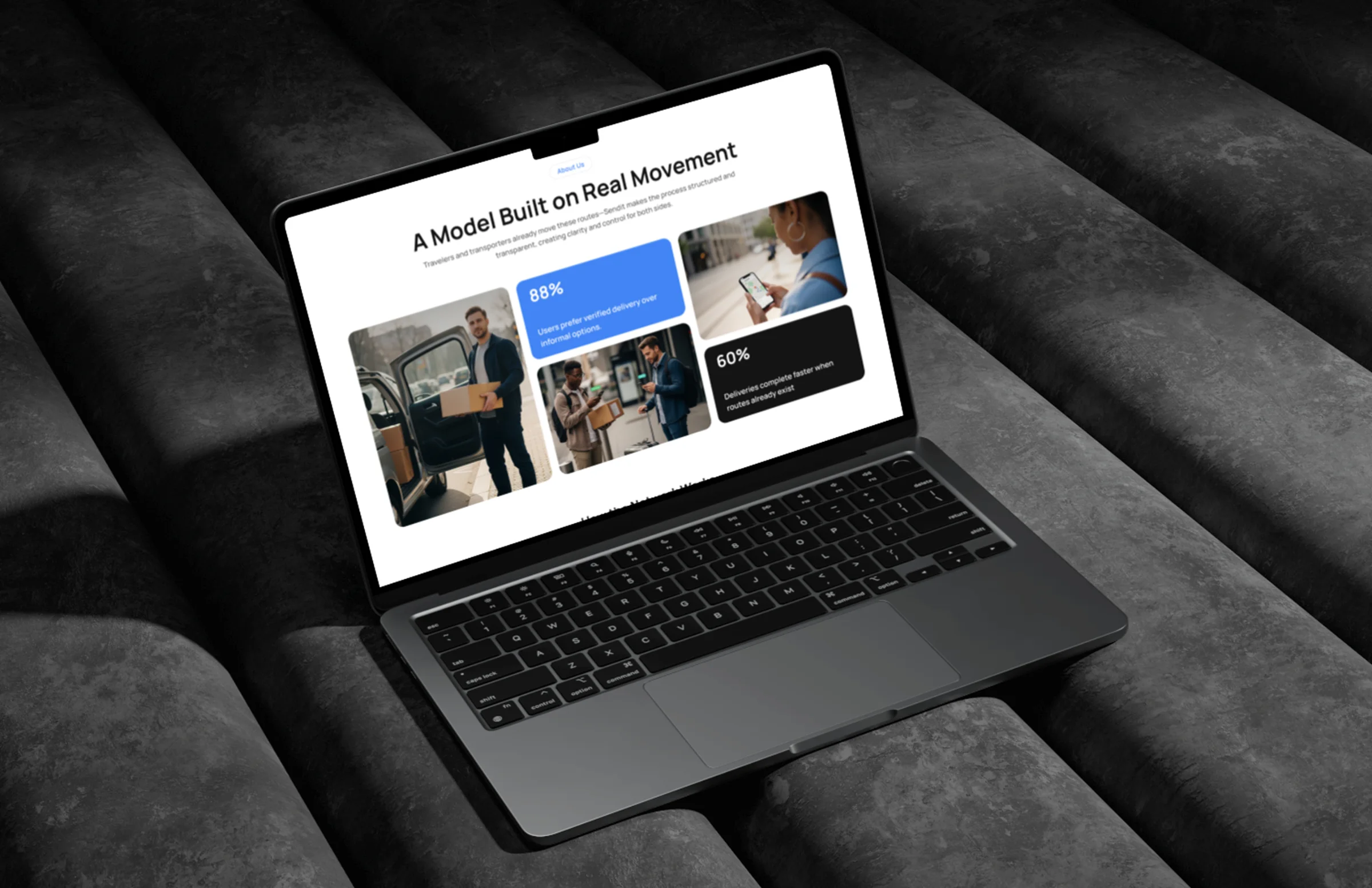
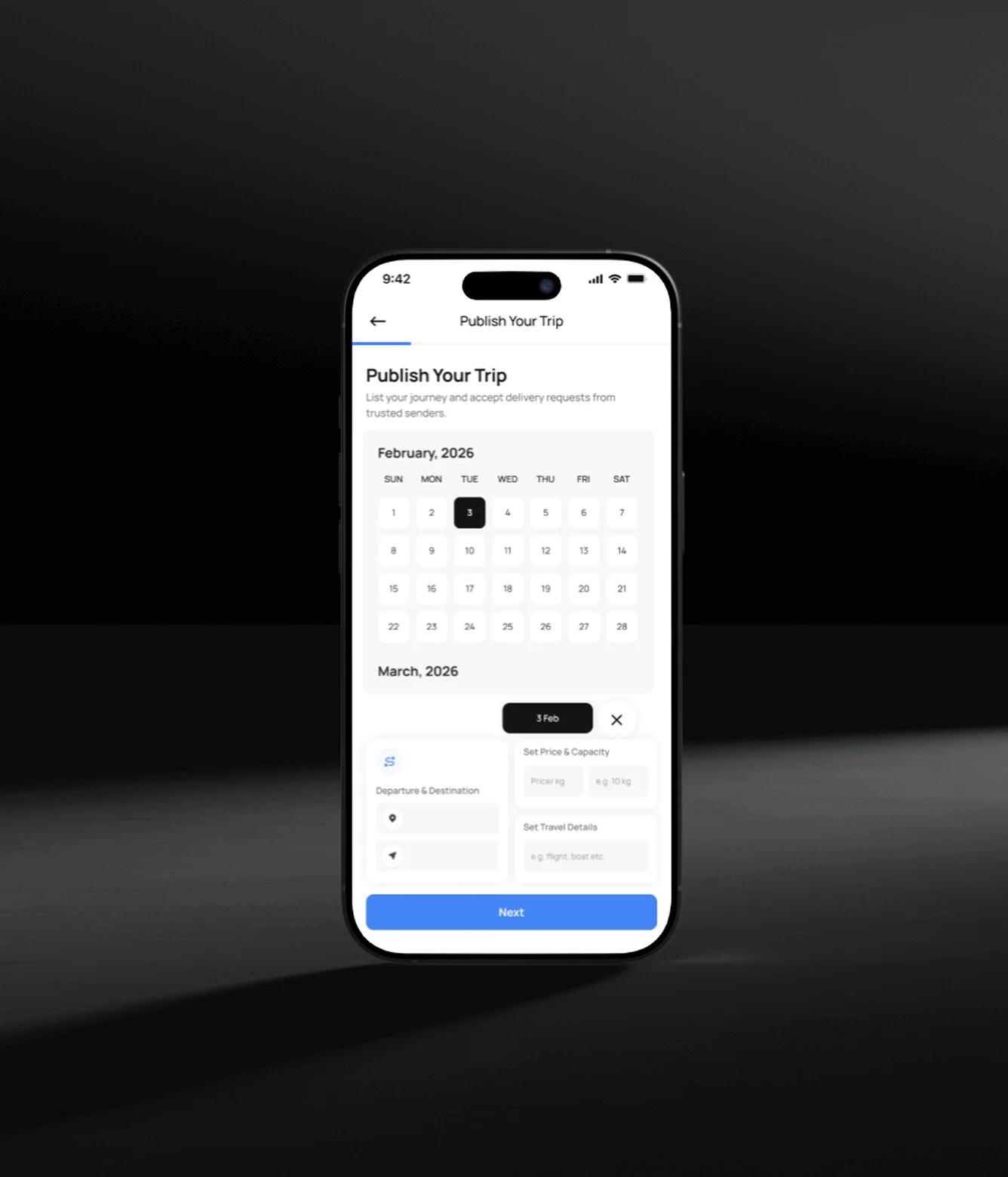
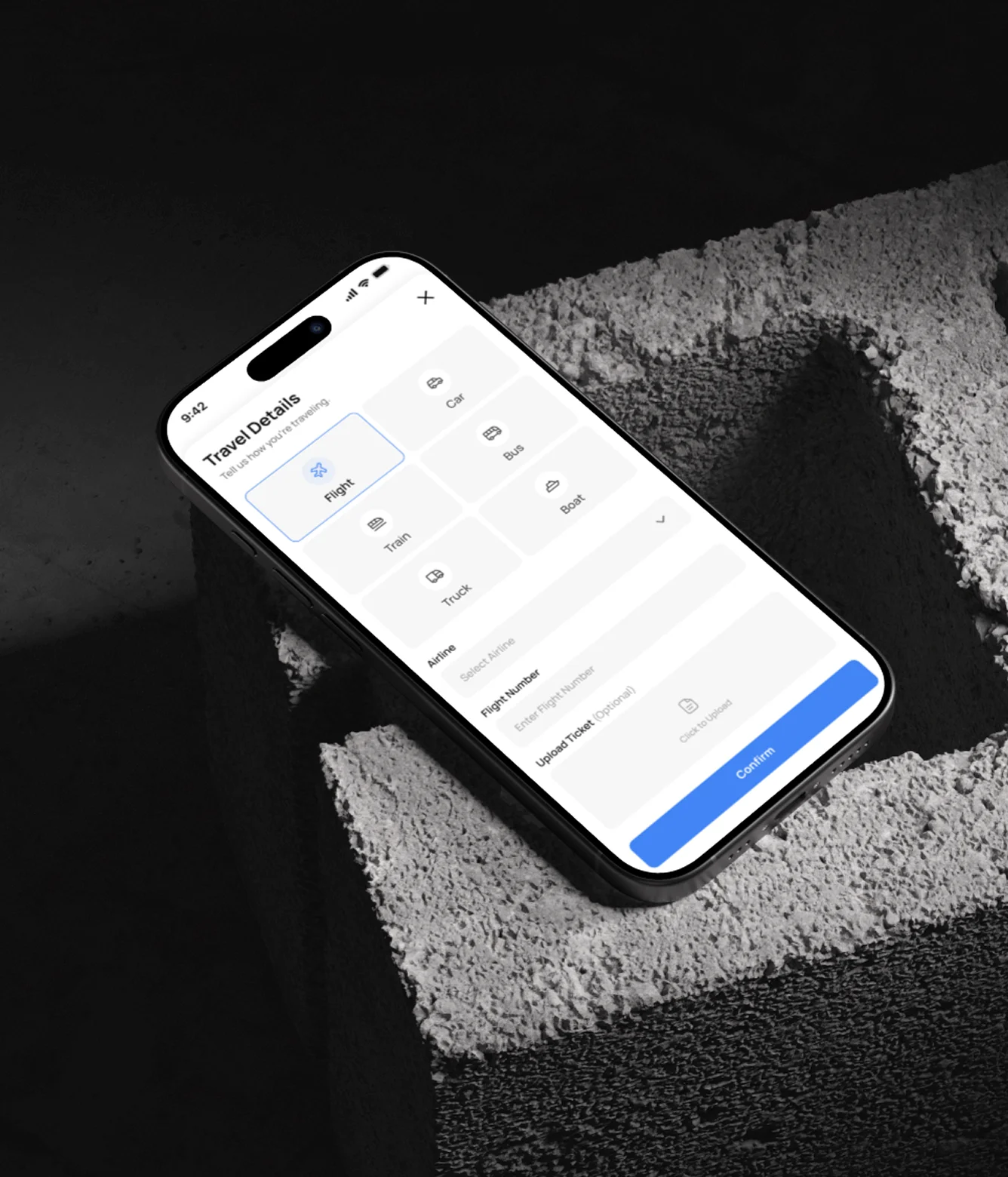
The UX design of Send It focuses on making package delivery simple, trustworthy, and efficient for every user. We reduced friction by simplifying user flows, highlighting essential actions, and minimizing unnecessary steps throughout the sending and delivery process. Every interaction was designed to help users complete tasks with confidence and clarity.
Information is structured for quick decision-making, with clear hierarchy across package requests, tracking, payments, and delivery updates. Primary actions such as creating requests, matching travelers, confirming deliveries, and monitoring shipments are placed where users naturally expect them. The result is a predictable, intuitive experience that supports trust, transparency, and seamless package delivery from start to finish.
Building Better Delivery Experiences Through Thoughtful UX
The redesigned Send It experience focuses on making package delivery faster, simpler, and more trustworthy for every user. By reducing friction, improving navigation, and introducing transparent delivery flows, the platform creates a seamless experience that helps senders, travelers, and transporters complete tasks with greater confidence.
- 1.Simplified package booking Reduced unnecessary steps to create and manage delivery requests more efficiently.
- 2.Improved delivery transparency Real-time tracking and clear status updates keep users informed throughout every shipment.
- 3.Stronger user confidence Identity verification, ratings, and secure handovers promote trust between all participants.
- 4.Faster task completion Streamlined navigation and intuitive interfaces help users complete actions with minimal effort.
- 5.Scalable design system Reusable components and consistent patterns support future product growth while maintaining usability.